Black History Month - Pioneers and Trailblazers
On the following pages, you will find helpful ebooks and online resources portraying the impact of this pioneers as well as how you may support
the health of the African American community.
This display is created as part of the Leatherby Libraries’ Diversity, Equity and Inclusion efforts in alignment with the Chapman University Strategic Plan for Diversity & Inclusion, fostering a diverse and inclusive campus climate.
Pioneers and Trailblazers
James McCune Smith, MD (1813-1865) - Dr. James McCune Smith was the first African American to hold an MD, obtaining his degree from the University of Glasgow in 1837. A practitioner in a New York City orphanage and later in surgery and general medicine, Dr. Smith gave numerous lectures and speeches in which he argued with medical objectivity against pseudo-scientific theories of racial superiority.
Lujan H.L., DiCarlo S.E. 2019. “First African-American to hold a medical degree: brief history of James McCune Smith, abolitionist, educator, and physician.” Advances in Physiology Education 43, no.2 (June):134-139.
Rebecca Lee Crumpler, MD (1831-1895) - Dr. Crumpler began her career working as a nurse without formal training, but earned her MD in 1864 from the New England Female Medical College in Boston, MA. She was the first black woman to obtain an MD in the United States, going on to practice with the Freedmen’s Bureau after the Civil War and publishing a book on pediatrics and women’s health titled, A Book of Medical Discourses in Two Parts (1883).
Zukauskas, Rebecca. “Rebecca Lee Crumpler.” Salem Press Biographical Encyclopedia. 2021.
Mary Eliza Mahoney, RN (1845-1926) - Mahoney was the first black woman to obtain a degree in nursing from an American institution, graduating from the New England Hospital for Women and Children school in 1879 and opening a path for others to follow in her footsteps. She was a founding member of the National Association of Colored Graduate Nurses and addressed its first conference in 1909.
Chayer, Mary Ella. “Mary Eliza Mahoney.” The American Journal of Nursing 54, no. 4 (1954): 429–31.
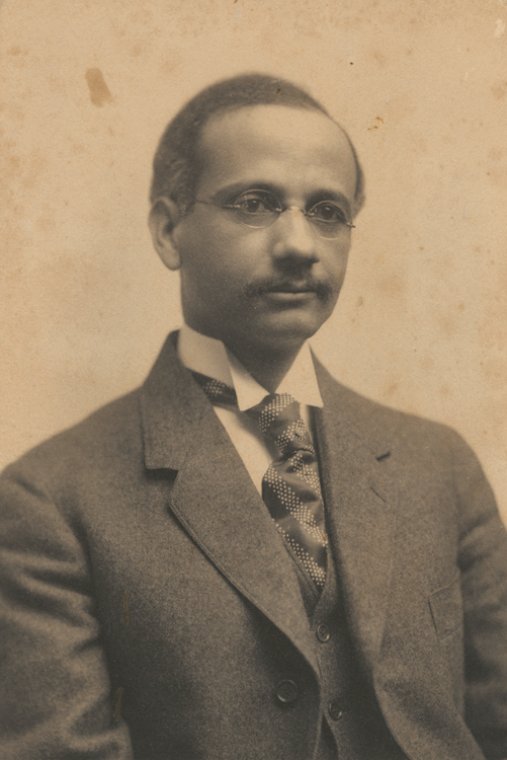
Daniel Hale Williams, MD (1856-1931) - Dr. Daniel Hale Williams obtained his MD from Northwestern University in 1883 where he taught anatomy before becoming a member of the Illinois State Board of Health. He was among the founders of the integrated Provident Hospital and Nursing Training School which opened as one of the first institutions of its kind in 1891. He later became chief of surgery at Freedman’s Hospital, Washington, D.C., and a professor of medicine at Howard University. Dr. Williams is most famous for completing the first successful open-heart surgery in the night of July 9th, 1893.
Luft, Eric. “Daniel Hale Williams.” Salem Press Biographical Encyclopedia. 2021.
Solomon Carter Fuller, MD (1872-1953) - Dr. Fuller, a native of Liberia, obtained his MD from Boston University in 1897, practicing at Westborough State Hospital as a neuropathologist. Dr. Fuller contributed to research on memory loss and dementia in his work at the Royal Psychiatric Hospital at the University of Munich with Dr. Alois Alzheimer. He worked to translate these findings into English, and later became a professor of Neurology at Boston University.
Mohammed, H. 2021. “Recognizing African-American contributions to neurology: The role of Solomon Carter Fuller (1872-1953) in Alzheimer's disease research.” Alzheimer's & Dementia: The Journal of the Alzheimer’s Association 17: 246– 250.
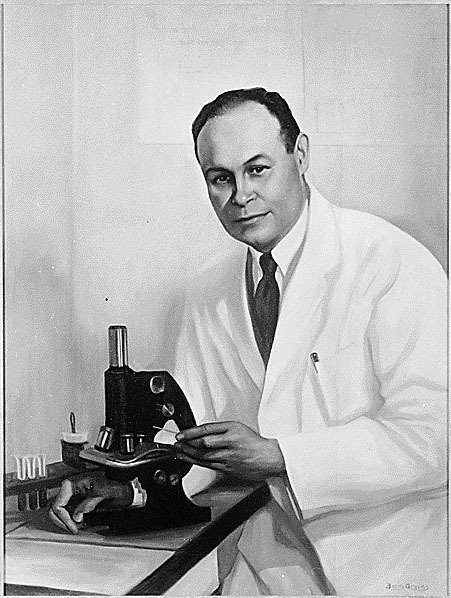
Charles Richard Drew, MD (1904-1950) - Dr. Drew was born and raised in Washington, D.C. before attending Canada’s McGill University for his M.D. Dr. Drew eventually became a Professor of Surgery at Howard University, though he is best known for his pioneering research on blood banking and the application of this research to great effect during the Second World War.
Ball, J. L. (2020). Charles Richard Drew. Salem Press Biographical Encyclopedia.
Anna Louise James (1886-1977) - Anna Louise James was the first African-American woman to obtain a degree from the Brooklyn College of Pharmacy, graduating in 1908. A year later, she became the first African-American woman to obtain a pharmacy license in the state of Connecticut, where she ran her own pharmacy from 1917 until her retirement in 1967 at the age of 81.
Andrews, Gregory E. ”James Pharmacy.” National Register of Historic Places Inventory/Nomination Form. Connecticut Historical Commission, West Hartford, July 1, 1994.
Jane Cooke Wright, MD (1919-2013) - Dr. Wright graduated in 1945 with her MD from New York Medical College before moving on to the Harlem Cancer Research Foundation. Dr. Wright came from a family of doctors in New York, but gained notability in her own right for her pioneering work in oncology, specifically in chemotherapy and tumor classification. She was a founding member of the American Society of Clinical Oncology, and later became Professor of Surgery at New York Medical College.
Jenkins, Edward S. "The Remarkable Dr. Jane Cooke Wright." Afro - Americans in New York Life and History (1977-1989) 13, no. 2 (Jul 31, 1989): 57.
Lynda D Woodruff, DPT, PhD (1948-2018) - Dr. Woodruff was the first African-American to join the faculty of the University of North Carolina-Chapel Hill’s physical therapy department in 1974, and went on to join the faculty of Georgia State University in 1978. She was instrumental in establishing numerous DE&I initiatives within her profession, from her work on the Georgia State Board of Physical Therapy to the APTA Advisory Council on Minority Affairs. Dr. Woodruff held membership in the APTA Academy of Clinical Electrophysiology and Wound Management and has had two lectureships on disparities in health professions established in her name.
“Lynda Woodruff, Leader in Physical Therapy Education, Dies at 70.” American Physical Therapy Association
Mae Jemison, MD (1956- ) - Dr. Jemison earned her MD from Cornell University Medical College in 1981 before joining the Peace Corps as a medical officer in Sierra Leone and Libera until 1985. She was then accepted into the NASA astronaut program, where she utilized both her undergraduate degree in chemical engineering and her medical expertise to conduct a wide array of experiments in space during the Endeavour shuttle mission. Since her departure from NASA in 1993, she has founded a non-profit organization geared toward seeding interest in science for youths and a biomedical company centered around development of mobile medical monitoring equipment.
Good, Bonnye Busbice. 2021. “Mae C. Jemison.” Salem Press Biographical Encyclopedia.