Pioneers and Trailblazers
Pioneers and Trailblazers
James McCune Smith, MD (1813-1865) - Dr. James McCune Smith was a physician, intellectual, and abolitionist, recognized as the first African American to earn a medical degree. Born into slavery in New York City, Smith overcame racial barriers to graduate from the University of Glasgow with honors in medicine. His return to New York began a distinguished career in medicine and public health, where he refuted medical racism and explored the social determinants of health. Smith's writings, notably challenging the racial biases of his time and advocating for equality, laid the early groundwork for linking health disparities to socioeconomic conditions. Despite facing systemic exclusion from the medical establishment, Smith's contributions to medicine, public health, and social justice have left an indelible mark on the field.
Aggarwal NK. The Legacy of James McCune Smith, MD—The First US Black Physician. JAMA. 2021;326(22):2245. doi:10.1001/jama.2021.18511
Rebecca Lee Crumpler, MD (1831-1895) - Dr. Rebecca Lee Crumpler distinguished herself as the first African American woman to earn a medical degree. Born in Delaware, Crumpler was inspired by her aunt's dedication to caring for the sick, which propelled her into nursing in Massachusetts. Her exceptional skills and a recommendation from her colleagues enabled her to attend the New England Female Medical College, where she graduated in 1864. After the Civil War, Crumpler dedicated herself to treating impoverished freed slaves in the South, utilizing her expertise in women's and children's health. She later returned to Boston, focusing on pediatric care and publishing A Book of Medical Discourses in 1883, a seminal work aimed at empowering women to manage household health. Despite the lack of recognition during her lifetime, Crumpler's legacy as a pioneering physician and author now serves as an inspiration, symbolized by the posthumous honoring of her grave in 2020. Her life's work underscored the importance of preventative care and the critical role of women in the medical field.
Ferry G. Rebecca Lee Crumpler: first Black woman physician in the USA. The Lancet. 2021;397(10274):572. doi:10.1016/S0140-6736(21)00301-9
Mary Eliza Mahoney, RN (1845-1926) - Mary Eliza Mahoney broke racial and gender barriers to become the first African American professional nurse in the United States. Born in Boston to parents who had left North Carolina to escape prejudice, Mahoney was inspired by her early experiences of caring for the sick, which led her to pursue nursing. She graduated from the New England Hospital for Women and Children's nursing program in 1872, distinguishing herself in a demanding field for nearly 40 years. Mahoney's commitment to professional nursing standards and patient care earned her respect and recognition, leading her to co-found the National Association of Colored Graduate Nurses (NACGN) and advocate for African American nurses' rights and opportunities. A fervent supporter of women's suffrage, she was among the first women to vote in Boston after the Nineteenth Amendment's passage. Mahoney's contributions to nursing are commemorated by the Mary Mahoney Award, and her legacy is enshrined in the ANA's Nursing Hall of Fame and the National Women's Hall of Fame, celebrating her pioneering role in nursing and her fight for equality.
Ungvarsky J. Mary Mahoney (nurse). In: Salem Press Biographical Encyclopedia; 2022.
Daniel Hale Williams, MD (1856-1931) - Dr. Daniel Hale Williams was a trailblazing physician, surgeon, and educator, known for performing the world’s first successful open-heart surgery in 1893. Born in Pennsylvania to a mixed heritage family, Williams faced early hardships but was determined to pursue a medical career. After earning his M.D. from the Chicago Medical College, he established himself in Chicago, where he founded Provident Hospital and Nursing Training School in 1891, one of the earliest interracial healthcare facilities in the U.S. Williams's groundbreaking operation on James Cornish, repairing a stab wound to the heart without the modern advancements of anesthesia and antisepsis, demonstrated his extraordinary skill and innovation. Beyond his surgical achievements, Williams played a pivotal role in advocating for African American physicians' professional rights, co-founding the National Medical Association in 1895 as an alternative to the racially exclusive American Medical Association. His contribution to medicine and his pioneering efforts in surgical techniques and hospital care left a lasting legacy, marking him as a significant figure in the advancement of African American participation in the medical profession.
Luft E. Daniel Hale Williams. In: Salem Press Biographical Encyclopedia; 2023.
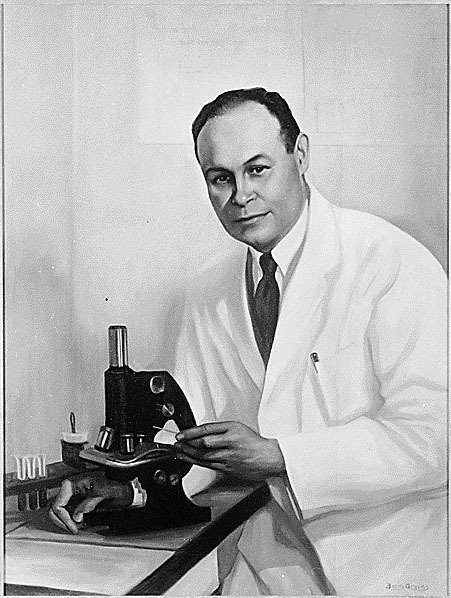
Charles Richard Drew, MD (1904-1950) - Dr. Charles Richard Drew was a physician and medical researcher who revolutionized the way blood was collected, stored, and used through the development of the blood bank concept, significantly impacting medical care during World War II and beyond. Born in Washington, D.C., Drew excelled academically and athletically before pursuing a career in medicine. After graduating from McGill University Medical School, he focused his research on blood plasma and transfusions, leading to a method that allowed blood plasma to be stored for extended periods. His work culminated in the establishment of a blood bank system that provided critical support to Allied forces during World War II, despite facing racial discrimination, including the military's insistence on segregating blood by the race of the donor. Drew's innovations not only saved countless lives during the war but also laid the foundation for modern blood donation and transfusion practices. Tragically, Drew died following a car accident in 1950, but his legacy endures in the lifesaving techniques he pioneered and in the ongoing work of the American Red Cross blood program.
Ball J. Charles Richard Drew. In: Salem Press Biographical Encyclopedia; 2022.
Mae Jemison, MD (1956- ) - Dr. Mae Carol Jemison has significantly impacted fields ranging from space exploration to medical research and education. Moving to Chicago at a young age, Jemison was determined to achieve her dream of becoming a scientist, despite societal challenges. Excelling in both academics and athletics, she earned degrees in chemical engineering and African and Afro-American studies from Stanford University, followed by a medical degree from Cornell University. Jemison's diverse career includes serving as a Peace Corps medical officer in Liberia and Sierra Leone, becoming the first female African American astronaut in 1992 aboard the Space Shuttle Endeavour, and conducting experiments in space that combined her expertise in medicine and engineering. Post-NASA, Jemison founded the Jemison Group and the Dorothy Jemison Foundation for Excellence, promoting science education and technology. Her leadership in the 100 Year Starship project and comments on the future of space exploration highlight her ongoing commitment to expanding human potential beyond Earth.
Good BB. Mae C. Jemison. In: Salem Press Biographical Encyclopedia; 2022.