THE ANTHROPOCENE WITHIN ART
-“The Anthropocene Epoch is an unofficial unit of geologic time, used to describe the most recent period in Earth's history when human activity started to have a significant impact on the planet's climate and ecosystems” - National Geographic
-“Co-existence, of humans with nature and of humans with each other, is the key concept of work”- Wolfgang Welsch
EXHIBIT
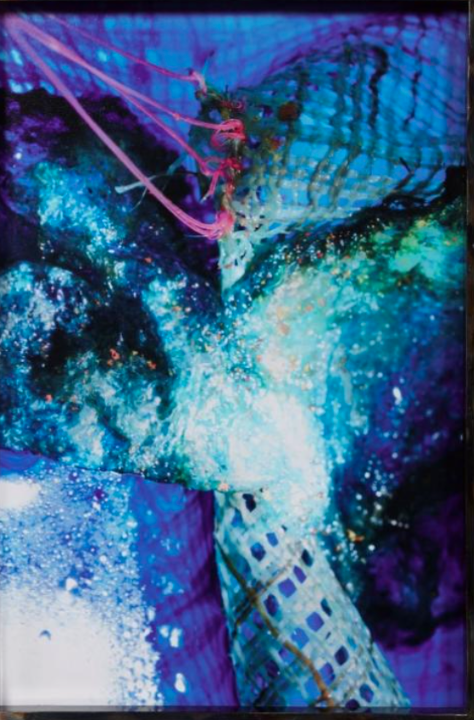
In her work, New Victimhood, Ngyuen uses the close-up aspect of small organisms with transient prosthetic lighting. She does this in various ways, that being the glow of a sunset, and Iphone flash, fire, or even battery powered LED lights. After finding her light source, she sets up the camera to capture the temporary arrangements of the certain objects under the certain light aspect, which highlights the transformity period of the object arrangements. Ngyuen’s goal in this work is to encapsulate the ineffable moment during the time of a transformation, alluding to the theory of things falling apart. This can then be related to larger themes such as political and environmental justice as well as the human impact on the anthropocene.
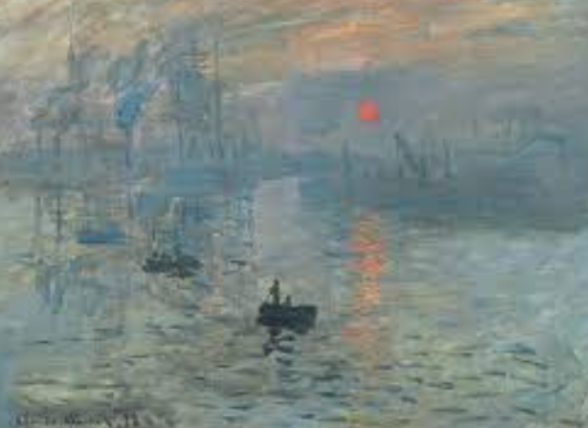
Sunrise is a painting by Claude Monet in 1872 during the Impressionist Movement, which highlighted the spontaneity of natural moments. The light and somewhat sketchy brush stroke alludes to the stylistic features that were dominant during this time, leaving the overall work almost abstract in nature. The theme of this piece works hard to reach into the mind of the viewers, and portrays notions of people living in conjunction with technology. The gray smoke and fog pertain to the idea of the anthropocene, displaying a scene of humans participating in an environment impacted by humans. It is interesting to note how this issue of the human impact on the environment was pertinent back in this time period, showing that this is a continuing challenge that is displayed within that of art.
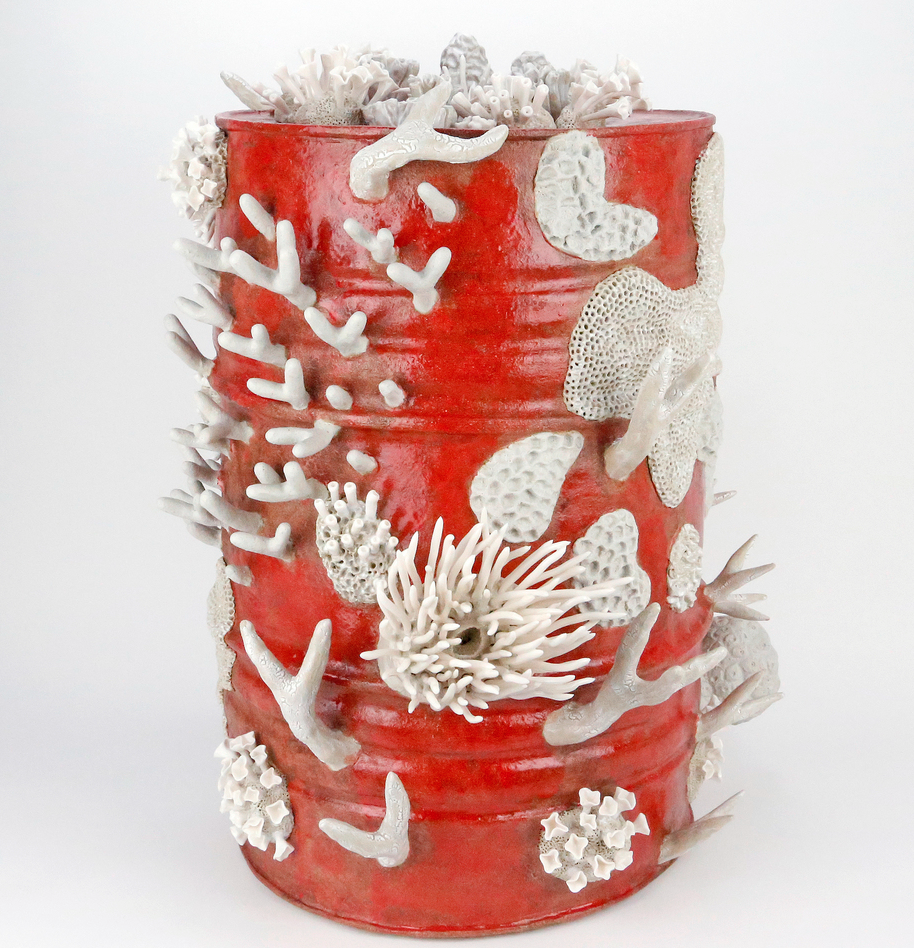
This piece by ceramicist Courtney Mattison, plays with the ideas of the connections between greenhouse gas emissions and the ocean. The piece has a medium of glazed stoneware and porcelain, to it its glassy and ceramic feel. An additional note is the fact that Mattison utilizes calcium carbonate, a compound found in many live coral communities. This work would add a unique element to the exhibit as it ties into the overall idea of the anthropocene, as well as the human impact on the ocean and the entirety of the environment. The piece shows the somewhat devastating harmony that takes place between humans and the environment in which they inhabit.
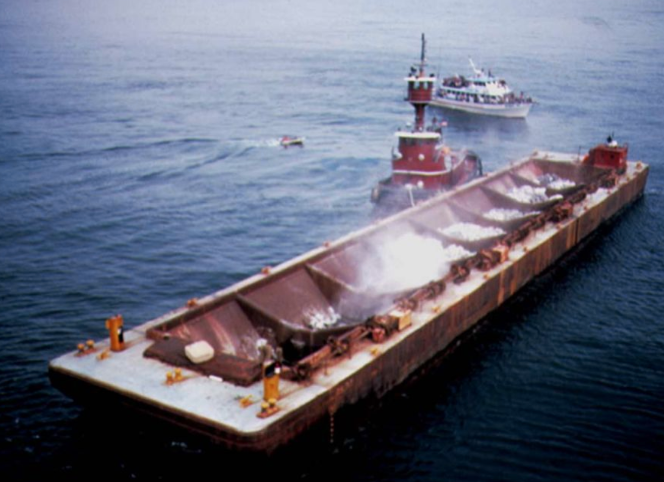
This piece is fascinating as it is actually a large scale, functioning piece of art. The work was composed of over 17,000 coal fly-ash blocks, and it recycles waste, establishes a positive habitat for fish, and continues to feed people. It was created in 1980 on the bottom of the Atlantic, 40 miles from the New York Harbor. The sculpture utilized coal waste to create a productive piece of art by turning waste into an environmentally sustainable piece of work. Again this unique work lends itself to the overall theme of the exhibit, that being the human impact on the environment. This idea is usually contrasted in a grim light, showing the devastating factors in which humans have created, but this opposes the notion, and shows how art can be actively productive and help the environment.