Sara Josephine Baker, MD, DrPH (1873 - 1945)
1 2022-05-19T16:48:21+00:00 Ivan Portillo 741ad6f42573dbb784db9511d4627772eb86aa19 225 1 Unknown photographer, Public domain, via Wikimedia Commons plain 2022-05-19T16:48:21+00:00 Ivan Portillo 741ad6f42573dbb784db9511d4627772eb86aa19This page is referenced by:
-
1
2022-05-11T18:24:42+00:00
LGBTQIA+ Trailblazers
46
Containing significant figures who broke barriers and achieved greatness in the health sciences
plain
2024-05-10T23:39:48+00:00
Significant Figures and Trailblazers
Ben Barres, M.D., Ph.D. (1954 - 2017) - Ben Barres, a distinguished professor of neurobiology at Stanford University, made significant contributions to the understanding of glial cells in the brain. He broke ground in identifying the crucial role of these cells in neural function and pathology. His research at the Massachusetts Institute of Technology, Dartmouth College, and Harvard University laid the foundation for his work at Stanford, where he led a laboratory dedicated to studying glial cells' impact on neural regeneration, synapse formation, and disease. Throughout his career, Barres was recognized with prestigious awards like the Searle Scholar Award and the Ralph W. Gerard Prize in Neuroscience. He shared his knowledge generously, mentoring countless young scientists and creating a vibrant lab culture that encouraged curiosity and persistence. As a transgender man, Barres leveraged his unique perspective to become a powerful advocate for equality in science. He championed gender parity and fought for the inclusion of LGBTQ and minority scientists. He used his own experiences to argue against gender bias in scientific communities and worked to eliminate harassment and discrimination.
Allen NJ, Daneman R. In Memoriam: Ben Barres. Journal of Cell Biology. 2018;217(2):435-438.
Bruce Raymond Voeller, Ph.D. (1934 - 1994) - Bruce Raymond Voeller, Ph.D., was a prominent figure in the fight for gay rights and a pioneer in AIDS research. He was widely recognized as one of the world's foremost authorities on sexual orientation, the gay rights movement, and AIDS research. He coined the term AIDS (Acquired Immune Deficiency Syndrome) because of his firm belief that calling it a "gay"-related disease (GRID) was stigmatizing. After graduating Phi Beta Kappa from Reed College, Oregon, in 1956, Bruce won a coveted five-year fellowship to complete his doctorate in developmental biology, biochemistry, and developmental genetics at Rockefeller University in New York City. He became the youngest person ever to achieve the rank of Associate Professor at Rockefeller. In 1980, Voeller created the Mariposa Education and Research Foundation in Topanga, Calif, to educate the public about human sexuality and conduct scientific research to reduce the risks of sexually transmitted diseases. Voeller’s studies included testing nonoxynol-9, the chief agent in many spermicides, for its ability to inactivate the human immunodeficiency virus.
McWhirter DP. Bruce Raymond Voeller, Ph.D. May 12, 1934 - February 13, 1994. The Journal of Sex Research. 1994;31(4):325-326.
Ethel Collins Dunham, MD (1883 - 1969) - Ethel Collins Dunham, MD, was a specialist in the care of premature infants. Dunham was a pioneer in neonatal medicine, helping to establish standards for the care of newborn infants. She found that prematurity was the most important cause of death among newborns and that high mortality rates could be reduced if sound standards were established. In 1935, Dunham moved to Washington, D.C., where Dunham became director of the division of research in child development at the Children's Bureau. Her work was published in 1943 as Standards and Recommendations for the Hospital Care of Newborn Infants, Full Term and Premature. An expanded version became one of the American Academy of Pediatrics most widely distributed publications. Ethel Dunham was the first woman to be awarded the Howland Medal, the American Pediatric Society highest award.
Sicherman B, Green CH, Kantroy I, et al., eds. Dunham, Ethel Collins. In Notable American Woman, the Modern Period. Harvard University Press; 1980.
Martha May Eliot, MD (1891 - 1978) - Martha May Eliot, MD, was a pioneer in maternal and child health and a leading pediatrician. Eliot graduated from medical school at Johns Hopkins University in 1918. While a professor in the department of pediatrics at Yale University, Eliot also directed the National Children's Bureau Division of Child and Maternal Health. Her first critical research study of rickets in New Haven, Connecticut, and Puerto Rico explored issues at the heart of social medicine. During World War II, she administered the Emergency Maternity and Infant Care program, which provided maternity care for more than one million service members wives. She was one of the first women admitted into the American Pediatric Society and received the Howland Medal, the organization's top honor. In 1947, she became the first woman elected president of the American Public Health Association (APHA) and the first woman to receive APHA's, Sedgwick Memorial Medal. In 1964, APHA established the Martha May Eliot Award, an annual prize recognizing maternal and child health achievements.
Martha May Eliot, M.D. MMWR: Morbidity & Mortality Weekly Report. 1999;48(38):851.
Dunham and Eliot had an intimate connection in their careers and personal lives. Eliot and Dunham met in 1910 during their undergraduate days and remained a couple until Dunham died in 1969. When Eliot graduated from college a year before Dunham, she delayed entry to medical school by a year so they could enter Johns Hopkins together. Eliot graduated very high in her medical school class and was guaranteed an internship at Johns Hopkins. Still, when Dunham's application was rejected, Eliot opted instead for one in Boston, where she thought Dunham's prospects would be better. Even when Eliot took her first post in the U.S. Children's Bureau in 1924, she negotiated an arrangement that allowed her to work mainly from New Haven and spend only about one week a month in Washington, D.C. Only in 1935, when Eliot was promoted to assistant chief of the bureau and Dunham became the bureau's director of child development, did they move to the capital. Neither woman's obituary in the New York Times mentions their domestic partnership, but the opening line of Eliot's obituary offers an image that both describes their time and exalts their work: "An unmarried woman who devoted her life to problems of maternity and childcare."
Sicherman B, Green CH, Kantrov I, et al., eds. Dunham, Ethel Collins. In Notable American Woman, the Modern Period. Harvard University Press; 1980.
Richard Isay, MD (1934 - 2012) - Richard Isay, MD, was a psychiatrist and activist who advanced a progressive view of gay men's development. He wrote publications that introduced fellow psychoanalysts and mental health clinicians to a range of topics on sexual orientation. Isay campaigned against those sectors of institutional psychoanalysis that discriminated against LGB candidates and would-be training analysts. He served in a variety of leadership positions, including president of the Western New England Psychoanalytic Society, chair of the Committee on Gay, Lesbian, and Bisexual Issues of the American Psychiatric Association (APA), vice president of the National Lesbian and Gay Health Association (NLGHA), and member of the board of the Hetrick-Martin Institute (HMI) for LGBT youth in Manhattan. Isay was a professor of psychiatry at Weill Cornell Medical College and a faculty member at the Columbia University Center for Psychoanalytic Training and Research. Isay did not come out until he was forty and had already been married to a woman. After coming out, his colleagues ostracized him and stopped referring patients to him. He threatened a lawsuit in 1992 to force the APA to promise not to discriminate against gay people in training, hiring, or promotions. By 1997 the APA had endorsed marriage equality and was the first professional society to do so.
Kertzner R. In memoriam: Richard Isay (December 1934–June 2012). Journal of Gay & Lesbian Mental Health. 2013;17(1):127-128.
Sara Josephine Baker, MD, DrPH - Sara Josephine Baker, MD, DrPH, was a U.S. physician and public health administrator. She was also the first director of New York Bureau of Child Hygiene and an instrumental force in child and maternal health in the United States. A lesbian and a feminist, Baker was also a suffragist and a member of the Heterodoxy Club. She often diverged from expected gender roles by wearing masculine-tailored suits and joked that colleagues sometimes forgot she was a woman. Whether her gender was accounted for or set aside, it is doubtless that Baker faced discrimination and the same obstacles to a high-profile career that confronted women physicians throughout the medical profession in the early 20th century. As President of the American Medical Women’s Association from 1935 to 1936, Baker had entered more strictly feminist activity. Before American entry into World War I, she was a member of “the war brotherhood,” an organization that hoped to “keep doctors neutral.” Her work with poor mothers and children in immigrant communities had a dramatic impact on maternal and child mortality rates and became a model for cities across the country.
Parry MS. Sara Josephine Baker (1873-1945). American Journal of Public Health. 2006;96(4):620-621.
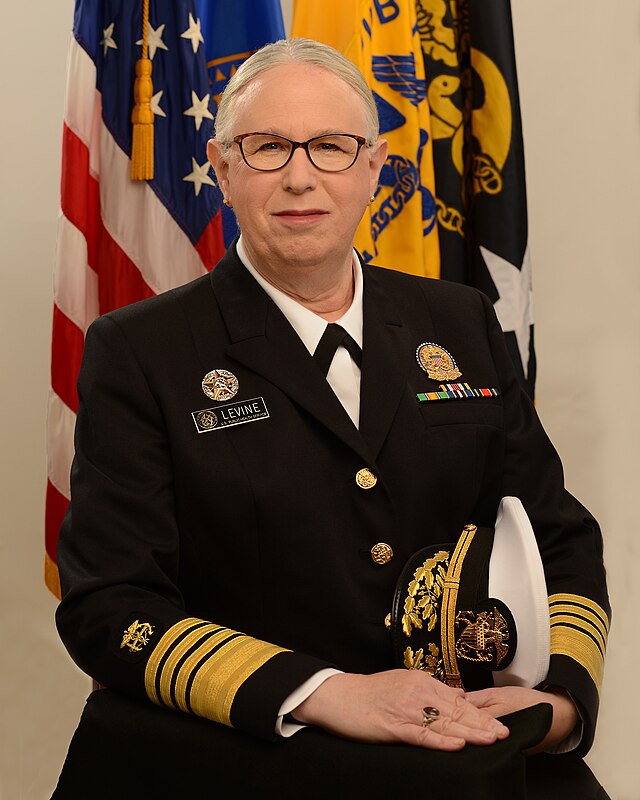
Admiral Rachel L. Levine, M.D. (1957- ) - Dr. Rachel Levine, born on October 28, 1957, is a politician and pediatrician who serves as the Assistant Secretary for Health at the U.S. Department of Health and Human Services. She made history in 2021 as the first openly transgender federal official confirmed by the U.S. Senate. Before this role, she held key public health positions in Pennsylvania, including Physician General and Secretary of Health. In these roles, she successfully implemented public health measures such as expanding access to the anti-overdose drug Naloxone and launching the state's medical marijuana program. Levine, who also became the first female four-star admiral in the U.S. Public Health Service Commissioned Corps, advocates for health equity and LGBTQ+ rights. Her long medical career includes pioneering work in adolescent medicine and leading a multidisciplinary eating disorders program at Penn State Hershey Medical Center. With degrees from Harvard and Tulane, Levine brings extensive medical and public health expertise to her federal role. She is deeply committed to addressing the COVID-19 pandemic, eliminating health disparities, and protecting the rights of marginalized groups, particularly LGBTQ youth.
Rich M. Rachel Levine. In: Current Biography (Bio Ref Bank); 2022.
James Makokis, M.D. (1981- ) - Dr. James Makokis is a Cree physician from Alberta, Canada, recognized for integrating Indigenous knowledge into Western medical practice. As a leader in holistic healthcare, he incorporates traditional healing practices alongside Western medicine to serve his patients. Dr. Makokis emphasizes mental, physical, emotional, and spiritual wellness, especially in treating marginalized communities like LGBTQ and Indigenous peoples. He completed his medical training at the University of Ottawa and holds a Master of Health Science degree in Community Health and Epidemiology. His work includes advocating for transgender rights and delivering culturally relevant care to Indigenous patients. He is also known for raising awareness on Two-Spirit issues, which he addresses in his professional and advocacy work. Beyond medicine, Dr. Makokis is a respected public speaker, educator, and champion for health equity. He promotes the concept of "Two-Eyed Seeing," blending Indigenous and Western perspectives to enrich medical understanding. Through this approach, he aims to challenge healthcare stereotypes and offer a more inclusive framework for wellness.
James Makokis on Indigenous ways. University of Ottawa. Published November 7, 2023. Accessed May 10, 2024.