Project Pluto Memorabilia
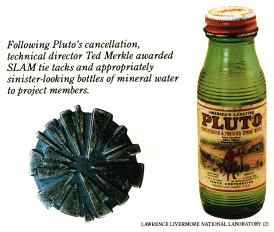
1 media/fig6_thumb.jpg 2021-04-16T02:57:51+00:00 Alec Meden e1e797c9a6d802de2c8135b843c32dd2b47f0d4f 92 1 Two items created after the cancellation of Project Pluto, commemorating it. plain 2021-04-16T02:57:51+00:00 Alec Meden e1e797c9a6d802de2c8135b843c32dd2b47f0d4fThis page is referenced by:
-
1
2021-04-16T04:01:08+00:00
SLAMS: The Flying Crowbar
29
The flying crowbar
plain
2021-05-20T23:34:49+00:00
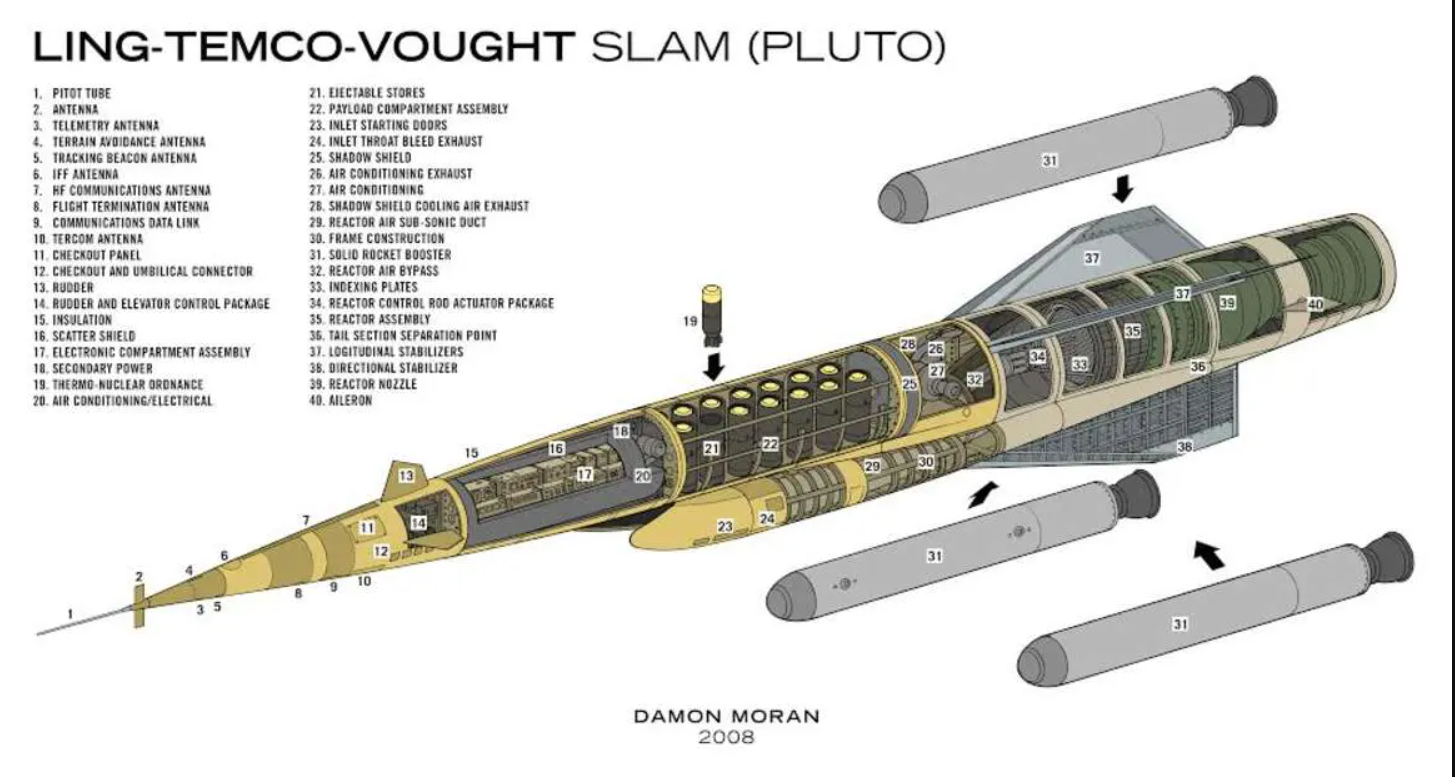
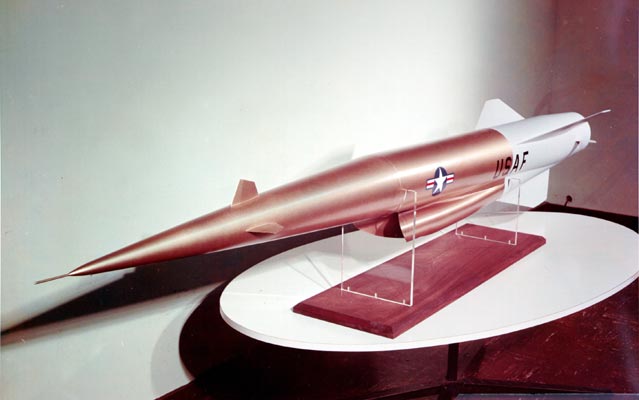
The device itself was called the Supersonic Low Altitude Missile. Despite being the size of a bomber, it was to to be unmanned, without a crew or pilot. The device would have carried an apocalyptic 16 nuclear warheads when fully armed. It would be powered by a nuclear fission reactor that generated up to 600 megawatts of power. This thermal energy (as well as radioactive fission products) was jammed into the combustion chambers of ramjets. The end result was the schematics of a vehicle dubbed "The Flying Crowbar" by project head Ted Merkle.
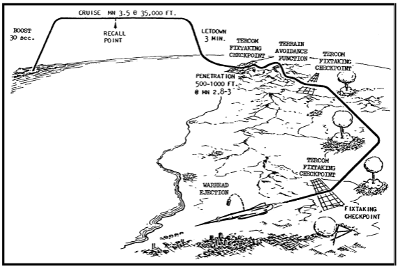
This allowed a truly wild capability: supersonic speed, barely a hundred meters off the ground to avoid radar and air defenses. The system would be guided by an onboard inertial guidance system, followed by a newly designed system eventually called TERCOM, which is still used in cruise missiles today. Because it was nuclear powered, it could operate indefinitely, able to loiter and fly in circles until called in for a strike. This raised two distinct and very different possibilities: the weapon could be ordered on standby, flying in circles over the ocean at high altitude, with the possibility of being recalled by radio, a feature which ICBMs lack. The other, darker possibility was that the weapon could fly over enemy population centers at low altitude, using it's lethal sonic boom and radioactive exhaust to inflict death and destruction for a prolonged period.
There were massive downsides however. The exhaust of the vehicle could be likened to a small, mobile Chernobyl disaster. It was so destructive that it was theorized that the weapon could cause damage just by circling around a target before even attacking with it's offensive weapons. Not only would the area behind the exhaust be irradiated, but in the vehicle's final descent phase, it would be burnt and blasted with sonic booms as the SLAMS traversed possibly as low as 80 feet in the air, while flying at Mach 3. Individuals would die from overpressure, and buildings would be devastated. The vehicle would fly to a target, descend to avoid air defenses and radar, and drop up to 16 nuclear warheads on various targets, before finally nosediving and detonating a final warhead. Such a devastating weapon, after being researched since 1956, was finally considered "too Provocative" by the Department of Defense and State Department in July 1964.
-
1
2021-05-20T23:49:15+00:00
The End: Cancellation and the Dustbin of History
10
plain
2021-05-21T02:39:46+00:00
Just two weeks after a successful full power test of the Tory II C test reactor at Jackass Flats, the program was abruptly cancelled. Hundreds of scientists suddenly found themselves without tasking. Why would a project that seemed so successful be cancelled?
Three reasons.
One, the intercontinental Ballistic Missile (ICBM) became a tested and reliable system to deliver nuclear warheads. It was likewise immune to any defense system extant at the time, and speedily reached their targets.
Two, the weapon system was considered too provocative. If it flew over any allied countries during its low altitude flight, such as those of European allies in a scenario where the Warsaw Pact invades Western Europe. Anybody beneath the vehicle would be killed outright by the sonic boom, and buildings would be damaged. While Ted Merkle argued that the fallout produced by the reactor would be insufficient to be cause for serious concern, there is an argument to be made that, above a certain threshold, any amount of hazardous ionizing radiation is something to worry about.
Three, the weapon had no counter imaginable to planners at the time. Even to this day, hypersonic weaponry is incredibly difficult to detect and counter because these weapons are simply moving so low and so fast. US policymakers were worried that if they deployed a weapon like the SLAM, they would force the Soviet Union to create a similar device to maintain deterrence, leaving the US vulnerable to an unstoppable, devastating weapon.
In the end, this story acts as a valuable example of what the US government was willing to consider at the height of the Cold War. All nuclear weapons are inhumane and indiscriminate, but the SLAM is perhaps the most brutally clear representation of these qualities. Flying the device alone irradiated the environment. It heightened fears of escalation, and would contract the amount of time descision makers would have to react in the event of a nuclear attack.
The project's assets were quickly reassigned or mothballed. The mighty Tory II C ramjet was sealed, still fully assembled, in the expensive and heavily shielded remote control disassembly building. One marvel of technology became a tomb for another, and thankfully, we never had to find out what it was like to live in a world with air-breathing nuclear ramjets.
Or do we?
Russia currently claims to be developing a hypersonic nuclear ramjet cruise missile known as the Burevestnik (Petrel, in Russian). It was speculated by some that the recent nuclear accident at Nyonoksa was caused by a test of this technology. Whether or not that is the case, Russia is publicly promoting this weapon system as a way to evade ballistic missile defenses. Perhaps we will need to learn to live with this weapon after all.