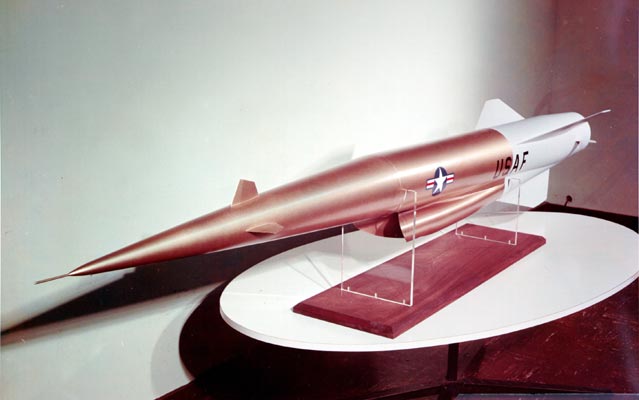
SLAM Wind Tunnel Model
1 2021-04-16T03:02:22+00:00 Alec Meden e1e797c9a6d802de2c8135b843c32dd2b47f0d4f 92 1 A wind tunnel model of the Project Pluto SLAM plain 2021-04-16T03:02:22+00:00 Alec Meden e1e797c9a6d802de2c8135b843c32dd2b47f0d4fThis page is referenced by:
-
1
media/maxresdefault.jpg
2021-04-16T02:47:34+00:00
Introduction
34
What is Project Pluto
plain
2021-05-21T04:01:57+00:00
This is the story of the most devastating weapon never made.
It was the 1950's, and US planners began growing concerned over her possibility of Russian nuclear bomber superiority. They wished to ensure that the US maintained nuclear deterrence by fielding a plausible strike weapon that could evade air defenses of all kinds. Bombers could be shot down, ICBM's were still being developed. Military planners, however, had decided that they needed something guaranteed; something to make good on the promise of nuclear revenge that lies at the heart of nuclear deterrence.
They needed something that could fly low enough to evade radar, fast enough to evade antiaircraft fire and jets. It needed to carry a heavy payload, and it needed to be reliable. Thus, Project Pluto was born.
Project Pluto was a weapons program operated by the US Air Force and Atomic Energy Commission. If it had continued past the planning stage, it would have developed the most devastating weapon in human history, short of a fully stocked ballistic missile submarine. To even fly this vehicle was to irradiate miles of land. So radioactive in fact, that it would kill any pilot, and thus an early version of unmanned drone technology was conceptualized for it, a rarity in the '50s and 60's.
It's ultimate goal was to drop sixteen nuclear weapons before crashing into a final target, baring it's radioactive reactor core to the world.
The program lasted for 7 years, involved 2 successful tests of it's engine, and nearly $133 million dollars. But in the year 1964, as ICBM's reign supreme and the horrifying implications of Pluto's weapon raise concern, it is ultimately cancelled.
Why is this important? Because we can learn about what the US government was willing to consider in this time of extreme competition. As the United States, China and Russia enter into a modern era of competition marked by the development of hypersonic weapons that operate under some of the same principles as Pluto, this history only become more relevant.
An excellent short documentary on Project Pluto follows, as well as various pages and links to better understand this fascinating and terrifying program.
-
1
2021-04-16T04:01:08+00:00
SLAMS: The Flying Crowbar
31
The flying crowbar
plain
2021-05-21T01:43:17+00:00
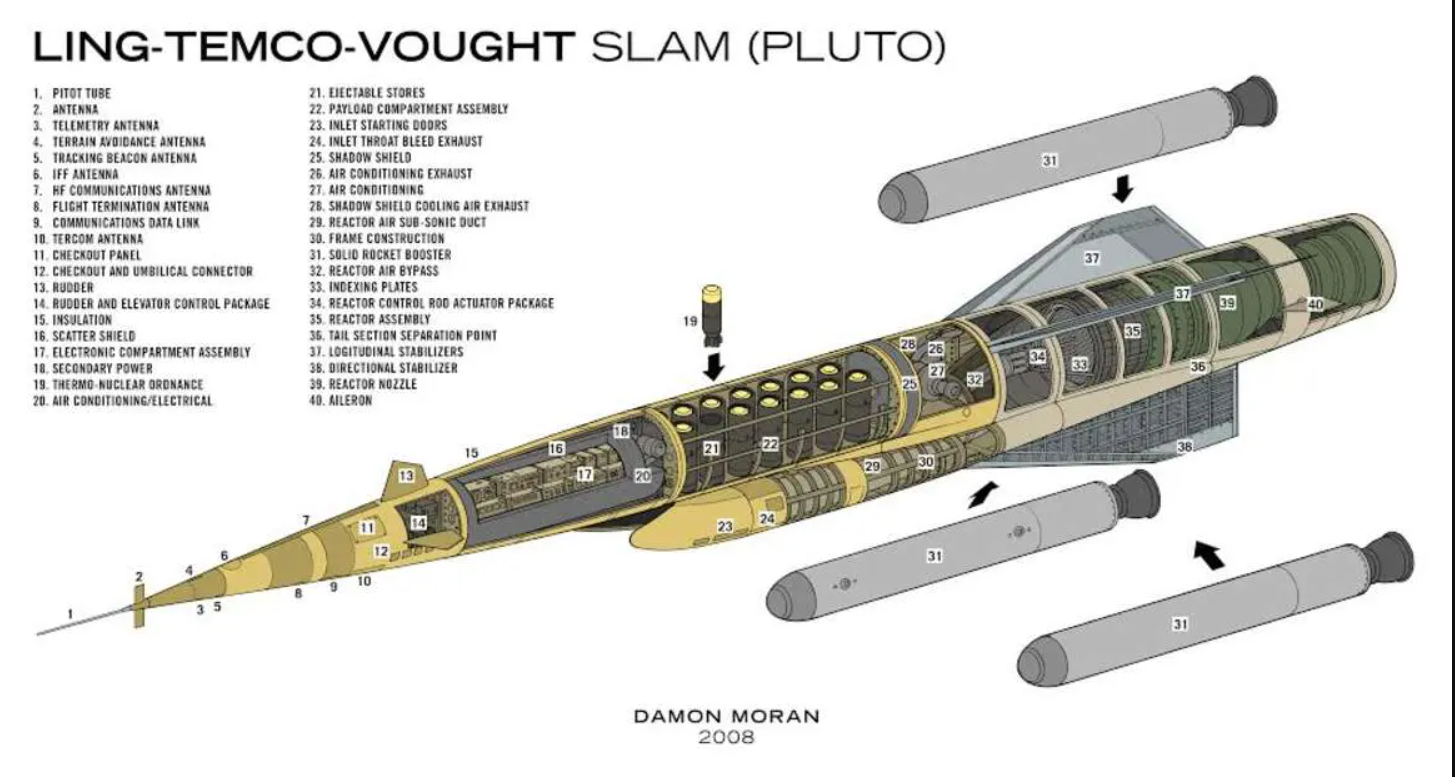
The device itself was called the Supersonic Low Altitude Missile. Despite being the size of a bomber, it was to to be unmanned, without a crew or pilot. The device would have carried an apocalyptic 16 nuclear warheads when fully armed. It would be powered by a nuclear fission reactor that generated up to 600 megawatts of power. This thermal energy (as well as radioactive fission products) was jammed into the combustion chambers of ramjets. The end result was the schematics of a vehicle dubbed "The Flying Crowbar" by project head Ted Merkle.
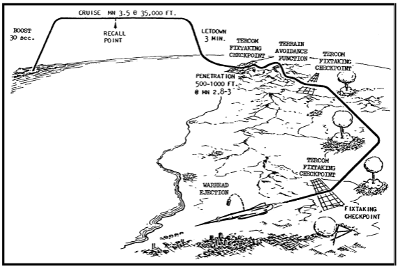
This allowed a truly wild capability: supersonic speed, barely a hundred meters off the ground to avoid radar and air defenses. The system would be guided by an onboard inertial guidance system, followed by a newly designed system eventually called TERCOM, which is still used in cruise missiles today. Because it was nuclear powered, it could operate indefinitely, able to loiter and fly in circles until called in for a strike. This raised two distinct and very different possibilities: the weapon could be ordered on standby, flying in circles over the ocean at high altitude, with the possibility of being recalled by radio, a feature which ICBMs lack. The other, darker possibility was that the weapon could fly over enemy population centers at low altitude, using it's lethal sonic boom and radioactive exhaust to inflict death and destruction for a prolonged period.
There were massive downsides however. The exhaust of the vehicle could be likened to a small, mobile Chernobyl disaster. It was so destructive that it was theorized that the weapon could cause damage just by circling around a target before even attacking with it's offensive weapons. Not only would the area behind the exhaust be irradiated, but in the vehicle's final descent phase, it would be burnt and blasted with sonic booms as the SLAMS traversed possibly as low as 80 feet in the air, while flying at Mach 3. Individuals would die from overpressure, and buildings would be devastated. The vehicle would fly to a target, descend to avoid air defenses and radar, and drop up to 16 nuclear warheads on various targets, before finally nosediving and detonating a final warhead. Such a devastating weapon, after being researched since 1956, was finally considered "too Provocative" by the Department of Defense and State Department in July 1964.