The Missile Knows Where It Is (TERCOM explanation)
1 2021-04-19T04:35:31+00:00 Alec Meden e1e797c9a6d802de2c8135b843c32dd2b47f0d4f 92 1 A short description of how TERCOM works plain 2021-04-19T04:35:31+00:00 Alec Meden e1e797c9a6d802de2c8135b843c32dd2b47f0d4fThis page is referenced by:
-
1
2021-04-16T04:08:16+00:00
TERCOM: How a Missile Navigates Before GPS
16
plain
2021-05-21T01:44:51+00:00
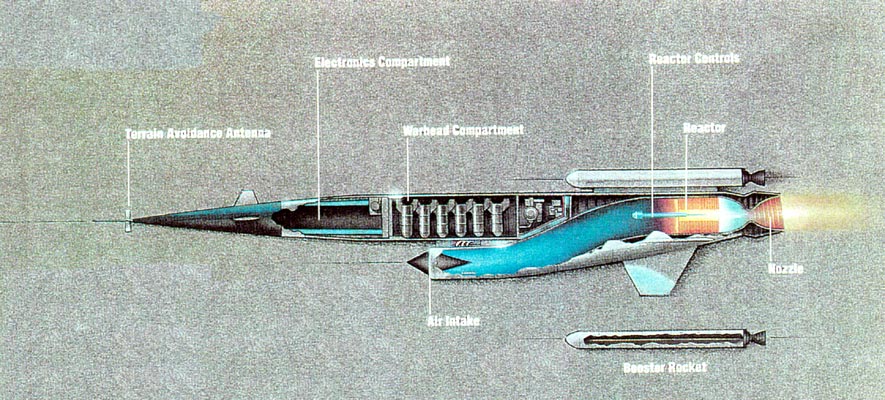
The researchers working on Project Pluto had a problem: the device was too radioactive for a human to safely ride in it without immense shielding. The vehicle also needed to be light in order to fly effectively and achieve it's mission. Therefore, the decision was made to have the device operate without a pilot: it would be unmanned.
Unmanned systems are growing increasingly common in the modern day. To navigate to a given position, many modern unmanned systems rely on GPS satellites, the same systems that allow modern smartphones to provide location services. But this wasn't an option for the team at Project Pluto. GPS wouldn't be invented for decades. But nonetheless, they needed a system that could reliably navigate at low altitude, in varied weather conditions, without flying into the side of a mountain and detonating in a nuclear fireball. And all of this needed to be done with personal computers still decades away as well.
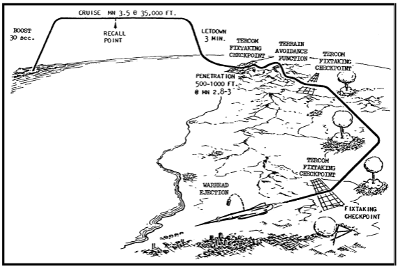
This was accomplished by two systems which would operate at different times throughout the mission profile. During the first section of the mission, represented in the image above by the high flying trajectory on the left, an inertial guidance system operated while the vehicle was at it's cruise speed, 35,000 feet in the air.
After the vehicle dived down towards the ground to evade radar, it would use what would eventually be called TERCOM, or Terrain Contour Matching. The system compared radar images of features on the ground to a prerecorded list of possible landmarks in it's memory, based on it's flight path. it would compare it's radar returns with this internal memory, and guide itself to targets. TERCOM is still used in the US Tomahawk cruise missile to this day.
It is succinctly, if hilariously, described in this video, which utilizes audio from an official training film: