Anders Little
The human body is a device that simultaneously unites and divides everyone. Through societal practices, political legislation, mass media, and beyond, the body becomes less of a biological form and transforms into a contested symbol that intersects with identity, power, and visibility. Throughout world history, the body has been used as a means for differentiation and separation rather than coalition. “To Be Human” aims to highlight and critique this deeply ingrained body discrimination that has become an integral part of human existence. Racism, sexism, ableism, age, and beauty standards are all byproducts of societal oppression that have developed over many years, which still negatively affect us today.
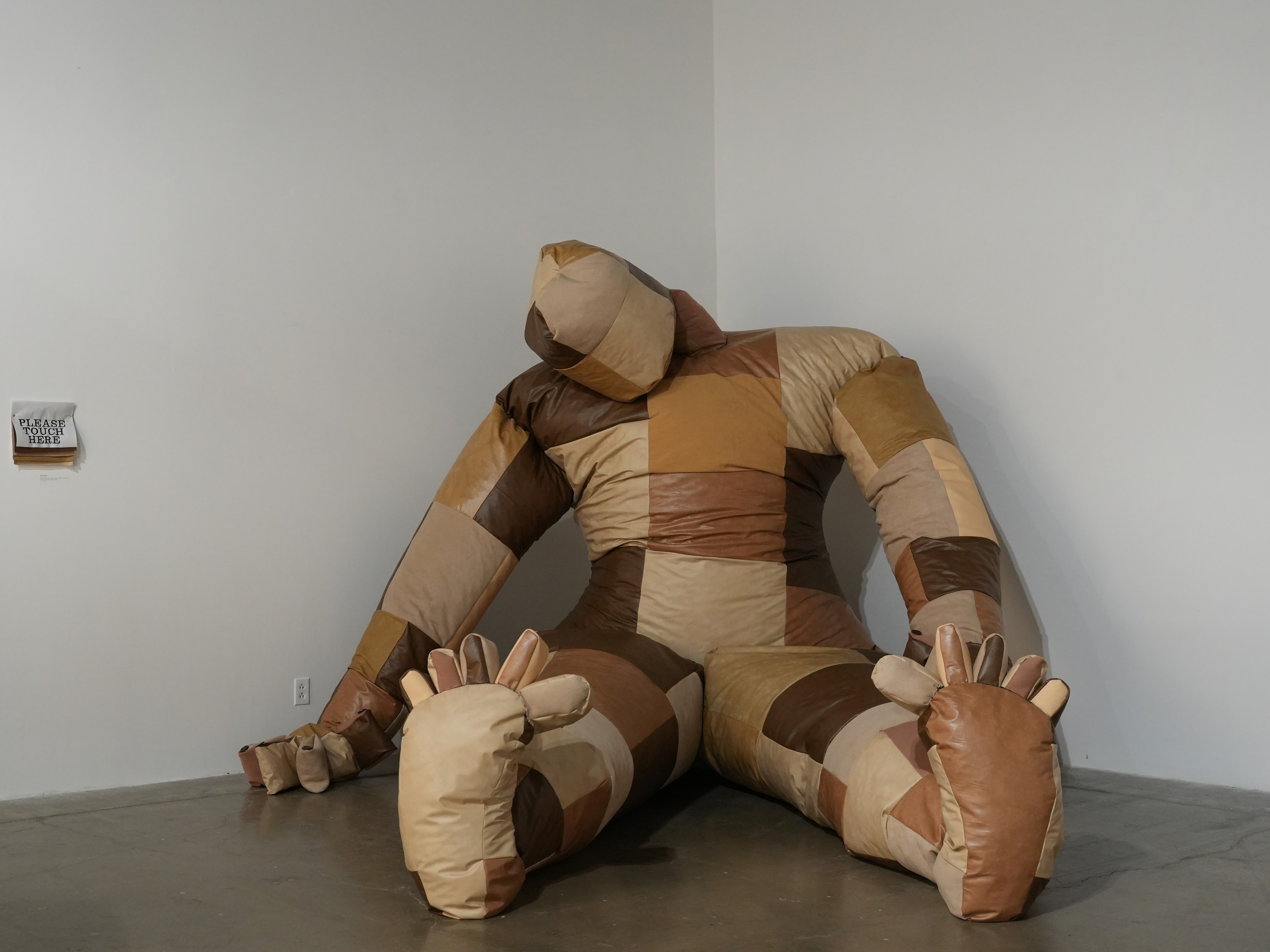
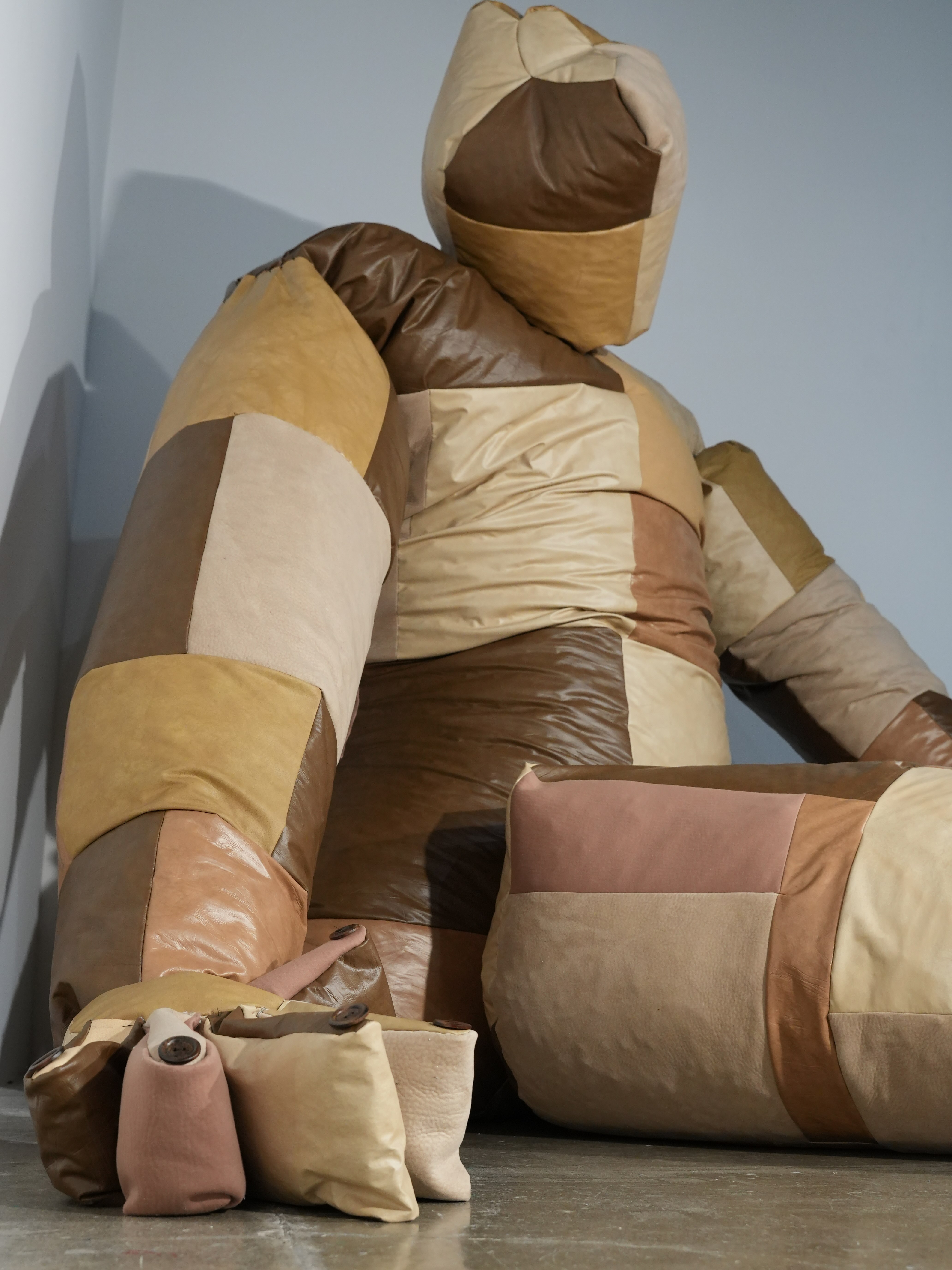
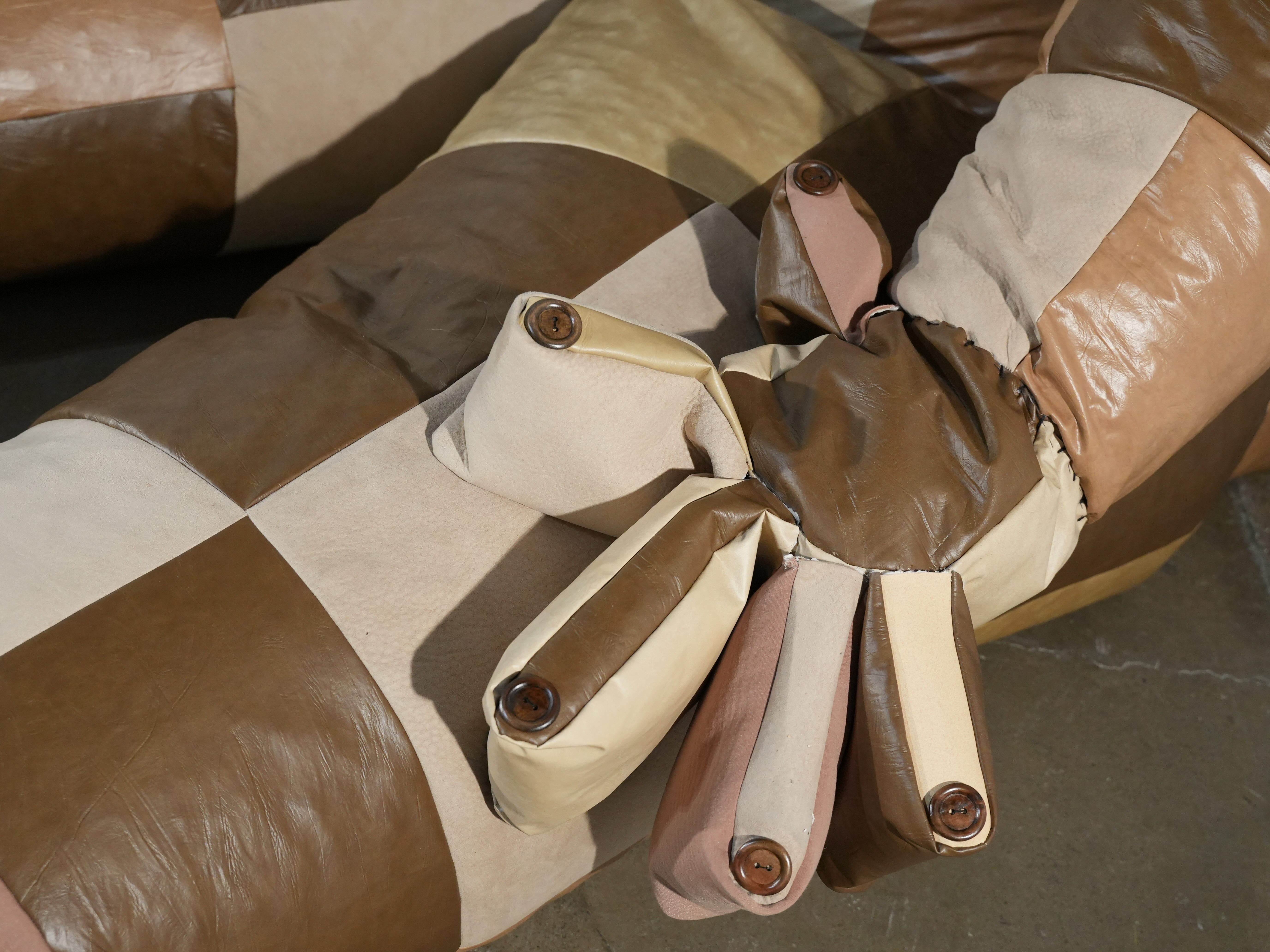
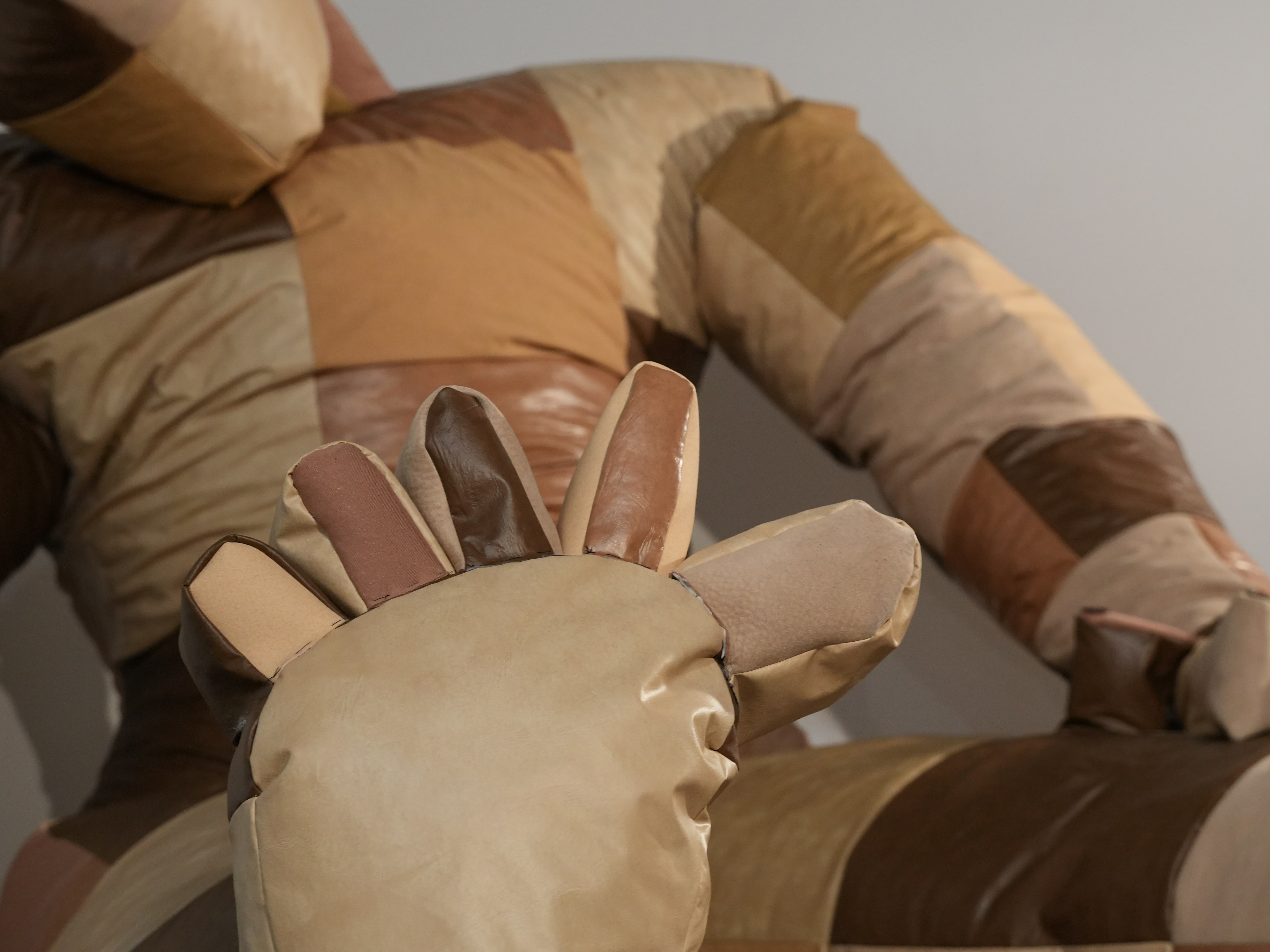
Formally, “To Be Human” is an 11 ft x 7 ft x 10 ft mixed textile soft sculpture. The sculpture is created using various skin-toned and textured fabrics sewn together in patchwork to create a large-scale human body. The limbs are attached to the torso using black yarn to create stitch-like marks. Internally, the sculpture is stuffed with packing peanuts and balloons to create a soft and dense structure. The body is positioned in an upright seated position with its legs straight out in front of it and arms at its sides. The figure is androgynous in gender and remains ambiguous with a featureless, tilted face. The universality prompts the audience to view the body as a biological form separated from the stigmas and pressures of society.
The figures' vulnerable state and larger-than-life scale are there to command the space. The patchwork fabric design works as a design element to create sectioning while also separating the various skin tonal shades. Each fabric borders on humanistic and pleather with wrinkles, stretching, and sagging to mimic the imperfections of real skin. As a soft sculpture, the figure resembles a rag doll through its plush-like nature and flexible stuffing.