Big View 3
1 media/picture 33_thumb.jpg 2026-05-08T19:11:20+00:00 Isabella Fraher 9a4aa45705539d76fb754807b9de1ab638944c91 446 1 plain 2026-05-08T19:11:20+00:00 20260430 162008 20260430 162008 Isabella Fraher 9a4aa45705539d76fb754807b9de1ab638944c91This page is referenced by:
-
1
media/picture1show.jpg
2026-05-08T18:56:41+00:00
Bella Fraher
5
plain
2026-05-08T19:18:06+00:00
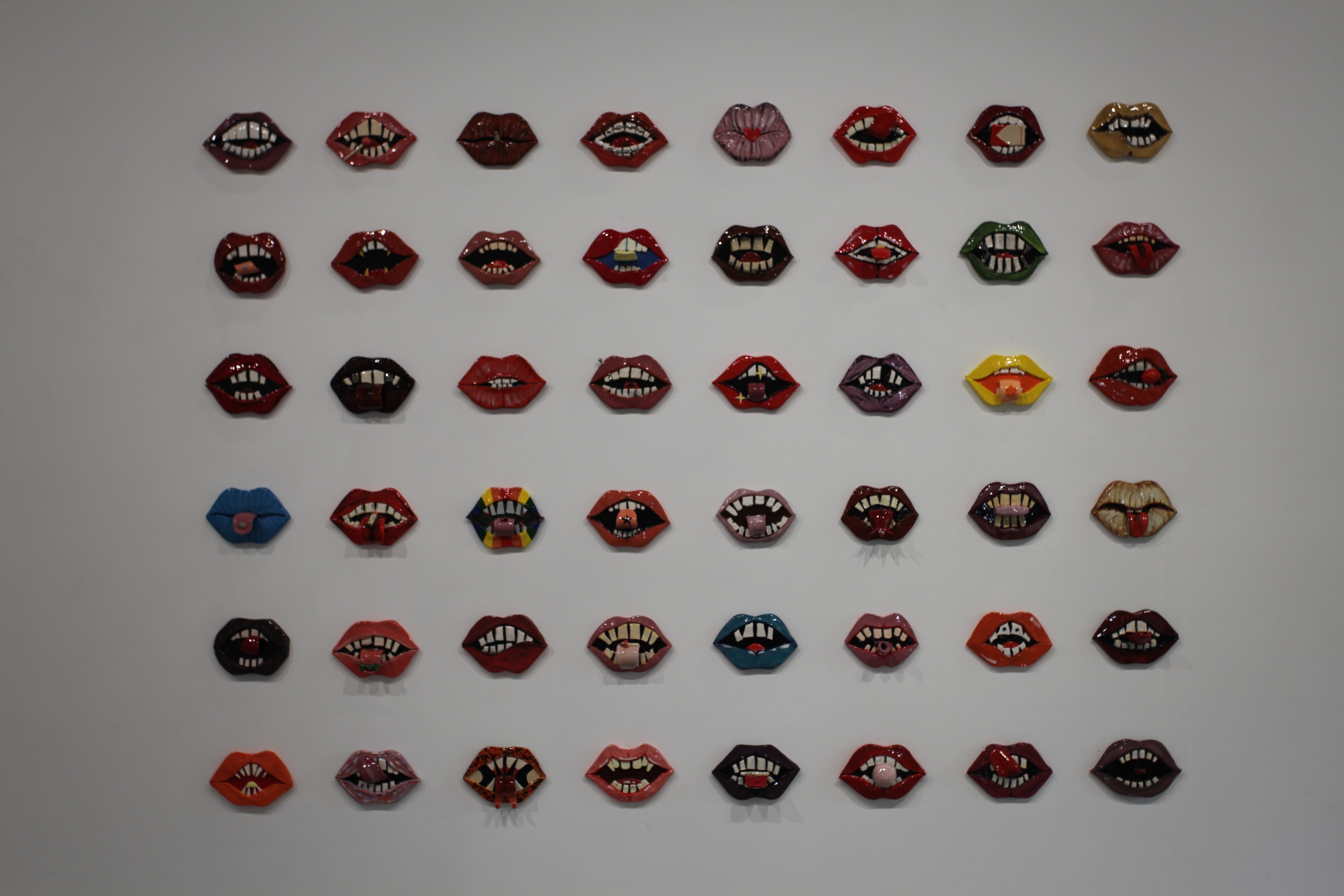
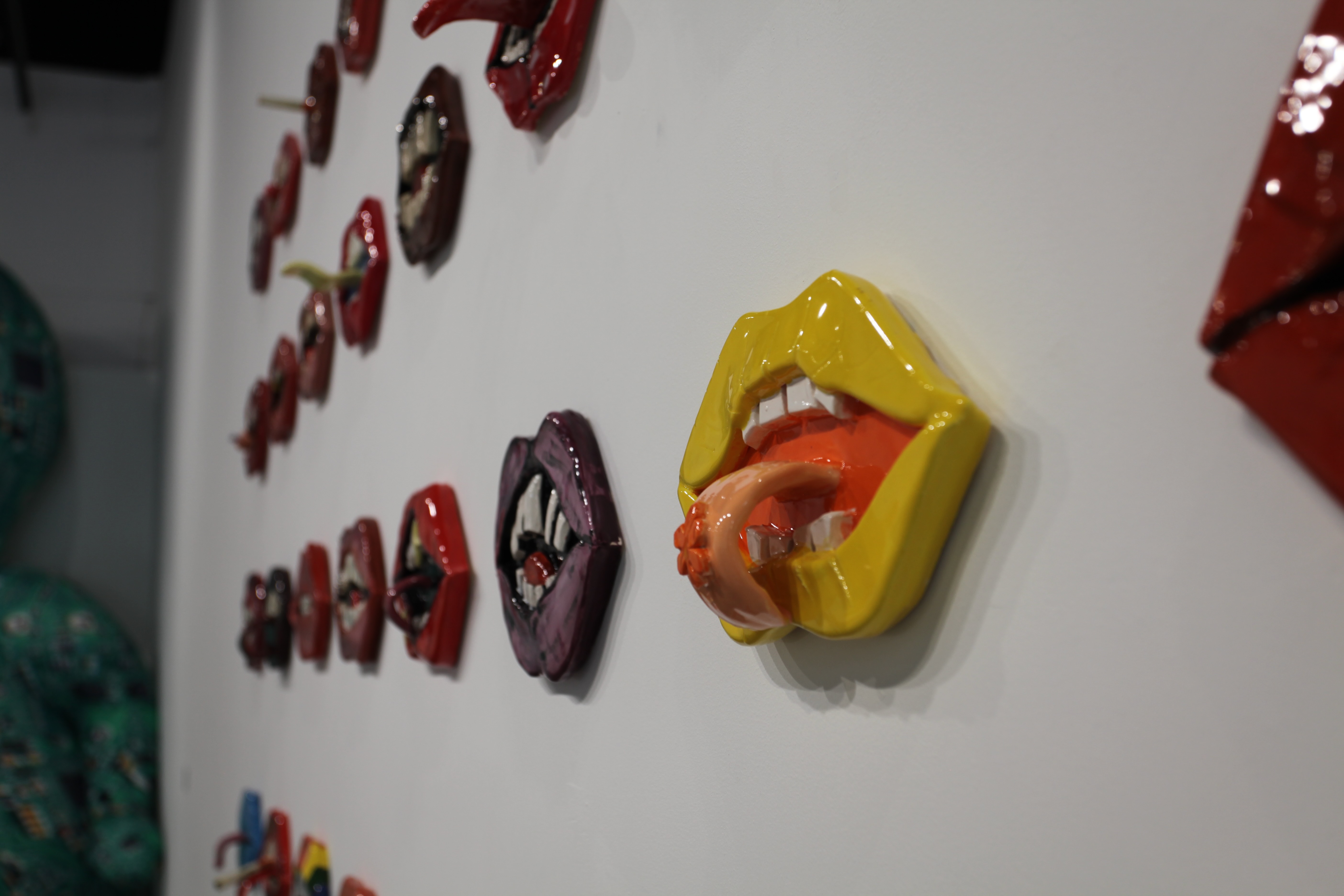
What should an artist do and shouldn’t do? By intentionally creating exaggerated, abnormal ceramic mouths, Mouthing Off satirizes the assumption that art must accurately depict comfort and reality. They embrace distortion and obscurity to challenge the value assigned to realism. Many artists are praised for their capability to replicate reality. By creating pieces that are conspicuously and intentionally flawed, it prompts viewers to question what exactly is displayed in front of them. The mouths in this installation amplify feelings of discomfort and unfamiliarity while being displayed in an orderly manner. For example, the teeth are yellowing, the lips are oddly shaped, and some surfaces are textured rather than smooth. By doing this, I encourage viewers to reflect a bit and feel a sense of uncertainty and strangeness, prompting them to consider how ridiculous our fixation on the social standard of realness can be. It is important to consider what truly defines a work of art’s significance.
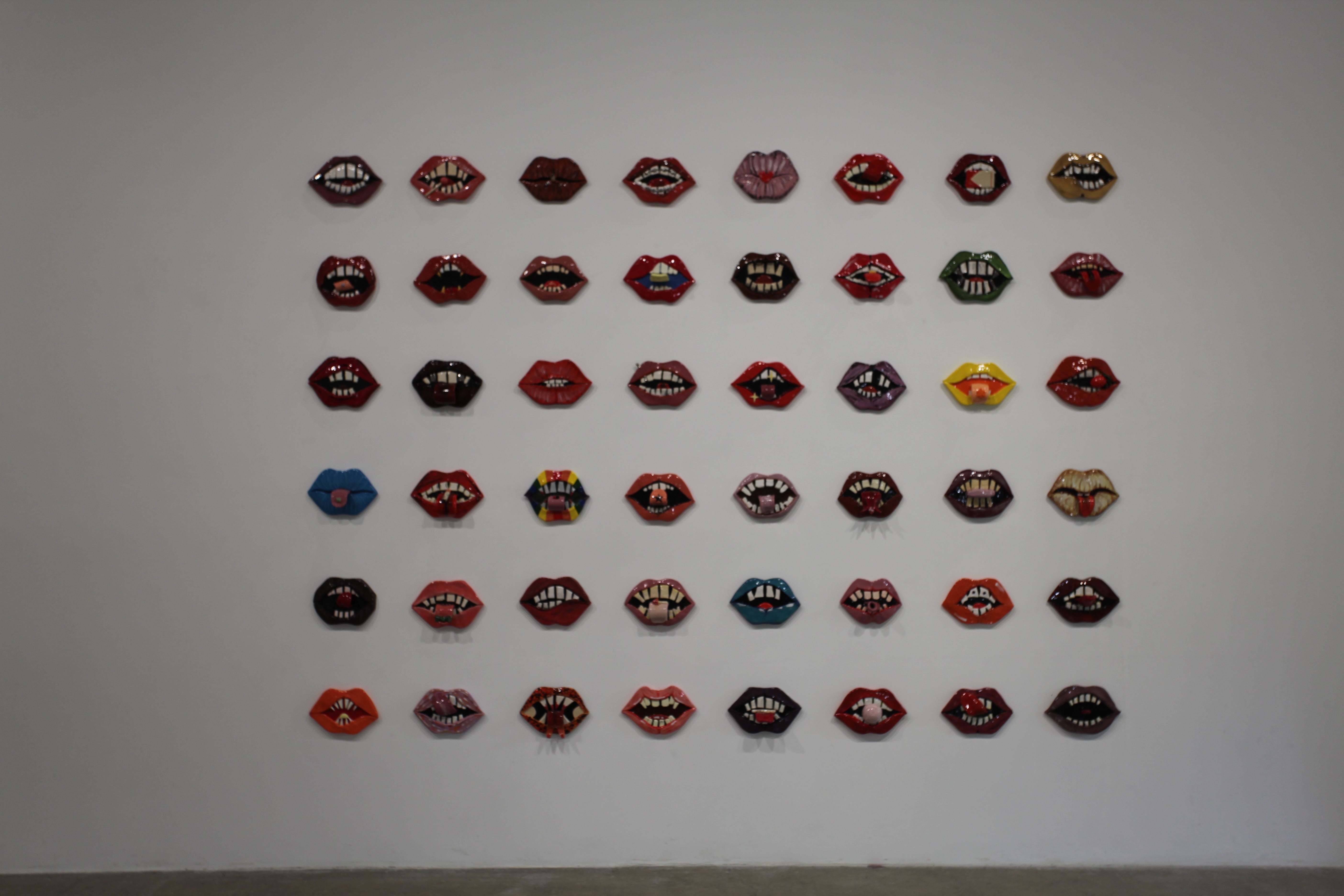
The arrangement of 49 ceramic mouths, displayed in a 7-by-7 grid on the wall, symbolizes order, a principle often upheld by symmetry and perfection. However, each individual mouth challenges that framework. Their cartoonish characteristics reject the theme that an artist's job is to accurately reflect the world. Instead, they amplify the mouth's capabilities to the point of abstraction. Furthermore, the audio recording of mouths making nosies amplifies the sensory and immersive experience within the installation. The mouths should feel like they might come to life and swallow you whole. This installation can be seen as a critique of the supremacy of perfection and “normalcy” within constructs tied to art and everyday life. The deranged mouths serve as caricatures of their realistic counterparts, pushing the concept so far that it falls into the category of absurdity. The mouths become more emotive and dynamic than a realistic depiction could ever achieve. They don't just represent mouths, they represent acts that are absurd. This unusual energy renders the pursuit of perfection irrelevant.
I was insistent on experimenting with the seriousness that often accompanies ceramic work. Ceramics have traditionally been associated with functionality and established practices, but this installation is non-functional and purposefully obscure. It transforms a historically disciplined material into a platform for humor and irregularity. Through this, I aspire to convey my belief that play and experimentation are essential components of creative development.
The 49 cartoon mouths, arranged in neat rows, form a grid of unconventional traits, each embodying personality and physical flaws. The audio clips included reinforce this idea, capturing the continuous cycle of artistic experimentation. The form and concept describe how the handmade and imperfect ceramics exemplify the critique of perfection, while the grid’s organization contrasts with their eerie individuality. Ultimately, the installation celebrates the chaotic and unpredictable aspects of artistic creation. It implies that being imperfect is a form of freedom. By embracing distortion and disregarding the principles of flawlessness and realism, artists create space for new individual expression.