Pioneers and Trailblazers
Pioneers and Trailblazers
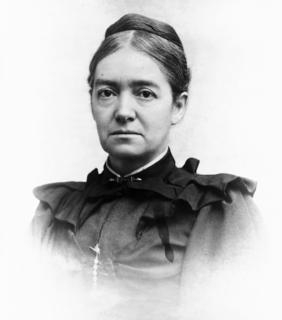
Elizabeth Blackwell, MD (1821-1910) - Dr. Elizabeth Blackwell emerged as the first woman to receive a medical degree in the United States, breaking significant gender barriers. Born in England and raised in a family supportive of educational and social reforms, Blackwell was initially reluctant to pursue medicine. However, motivated by a friend's suggestion and a personal commitment to overcoming societal constraints, she embarked on a challenging journey to become a physician. After being rejected by numerous medical schools, her perseverance led her to Geneva Medical College in New York, where she graduated in 1849 amidst skepticism and curiosity from her peers and the public. Her dedication to public health marked Blackwell's career, women's medical education, and the establishment of medical institutions, such as the New York Infirmary for Women and Children and a medical college for women, focusing on hygiene and preventative care. Despite obstacles and discrimination, Blackwell published extensive works, including her experiences and medical advice, contributing significantly to the medical profession and women's empowerment in healthcare. Her legacy, symbolized by her pioneering role and advocacy for women in medicine, inspires future generations.Mattis RL. Elizabeth Walker: the first woman doctor. Cricket. 2019;46(6):28-31.
Mary Putnam Jacobi, MD (1842-1906) - A trailblazer in American medicine, Dr. Mary Putnam Jacobi was renowned for her unwavering dedication to enhancing medical education for women. Born in London but raised in the United States, Jacobi overcame early opposition to her medical ambitions, eventually earning her degree from the Female Medical College of Philadelphia. Her quest for knowledge led her to Paris for advanced studies, where she became one of the first women admitted to the École de Médecine. In New York, Jacobi significantly contributed to the Women’s Medical College of the New York Infirmary, advocating for rigorous academic standards. She married Abraham Jacobi, sharing a life committed to medical and social reform. Jacobi's extensive medical writings and her role in founding the Association for the Advancement of the Medical Education of Women marked her as a pioneering advocate for women in medicine. Her work, particularly her award-winning essay that challenged prevailing notions about women's health, established her as a critical figure in the fight for women's rights in the medical profession. Jacobi's legacy is that of a pioneering physician and educator whose efforts paved the way for future generations of women in medicine.
Berman M. Mary Putnam Jacobi. In: Salem Press Biographical Encyclopedia. Salem Press; 2023.
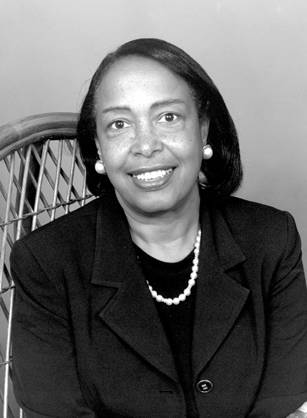
Patricia Bath, MD (1942-2019) - Dr. Bath earned her MD from Howard University in 1968. She shed light on health disparities in underserved populations while practicing at Harlem Hospital and on a fellowship at Columbia University. She became the first woman on the faculty of the ophthalmology department of UCLA. Dr. Bath is best known for her work on cataracts and the subsequent invention of a laser technology method to remove them, finalizing the patent in 1988.
Genzlinger, Neil. "Dr. Patricia Bath, Who Took On Blindness and Earned a Patent, Dies at 76." New York Times, June 5, 2019, B14(L).
Antonia Novello, MD, MPH (1944-) - Dr. Novello earned her MD from the University of Puerto Rico in 1970 before being appointed a fellow in the nephrology department of the University of Michigan’s Department of Internal Medicine. After stints in private practice, a pediatric fellowship at Georgetown University, and her MPH from Johns Hopkins University, she became the first woman to be appointed Surgeon General in 1990.
Berman, Janet Ober. 2021. “Antonia Novello.” Great Lives from History: Latinos, August, 1–2.
Mabel Farrington Gifford (1880-1962) - Gifford chose to attend the Natural Speech Institute in Buffalo, New York, before working in the speech clinic at the University of California, Berkeley . In 1915, she became “Chief of the Speech Clinic Out-Patient Department” and one year later organized the speech pathology program for the San Francisco Public Schools. She became Director of Speech Correction at the UC Berkeley clinic in 1920 after several years of focus on speech recovery for shell-shocked soldiers from the first World War. In 1925, she took her expertise to the state level, becoming head of the California Bureau of Correction of Speech Defects and Disorders within the California Department of Education until her retirement in 1952.
Malone, Dale George. 1966. "A Biography of Mabel Farrington Gifford." Master’s Thesis, Chapman University.
Mary McMillan (1880-1959) - Mary McMillan is one of the most influential figures in the history of physical therapy. After earning her BA in “Physical Culture and Corrective Exercises,” McMillan became a “reconstruction aide” (the predecessor to what is now physical therapy) at Walter Reed General Hospital during World War I. McMillan was a founding member and the first president of the American Women’s Physical Therapeutic Association, eventually becoming the American Physical Therapy Association. She published the first textbook in the field in 1921, titled, Massage and Therapeutic Exercise, and was influential in establishing the association’s journal, The P.T. Review.
Moffat, Marilyn. "The History of Physical Therapy Practice in the United States." Journal of Physical Therapy Education 17, no. 3 (Winter, 2003): 15-25.
Florence P. Kendall (1910-2006) - Kendall began her professional life as a high school PE teacher after earning her BS in physical education from the University of Minnesota. She then received an appointment to the Walter Reed Army Hospital in 1931 to begin her training in physical therapy, where she stayed until transferring to the Children’s Hospital in Baltimore. Kendall taught at Johns Hopkins and the University of Maryland in intervals between the 1940s-1980s and was Supervisor of physical therapy for Maryland’s Department of Health. She is best known for co-authoring the textbook, Muscles: Testing and Function in 1949.
Lawrence, Lucie P. "Florence Kendall: What a Wonderful Journey: Magazine of Physical Therapy." Pt 8, no. 5 (05, 2000): 36.
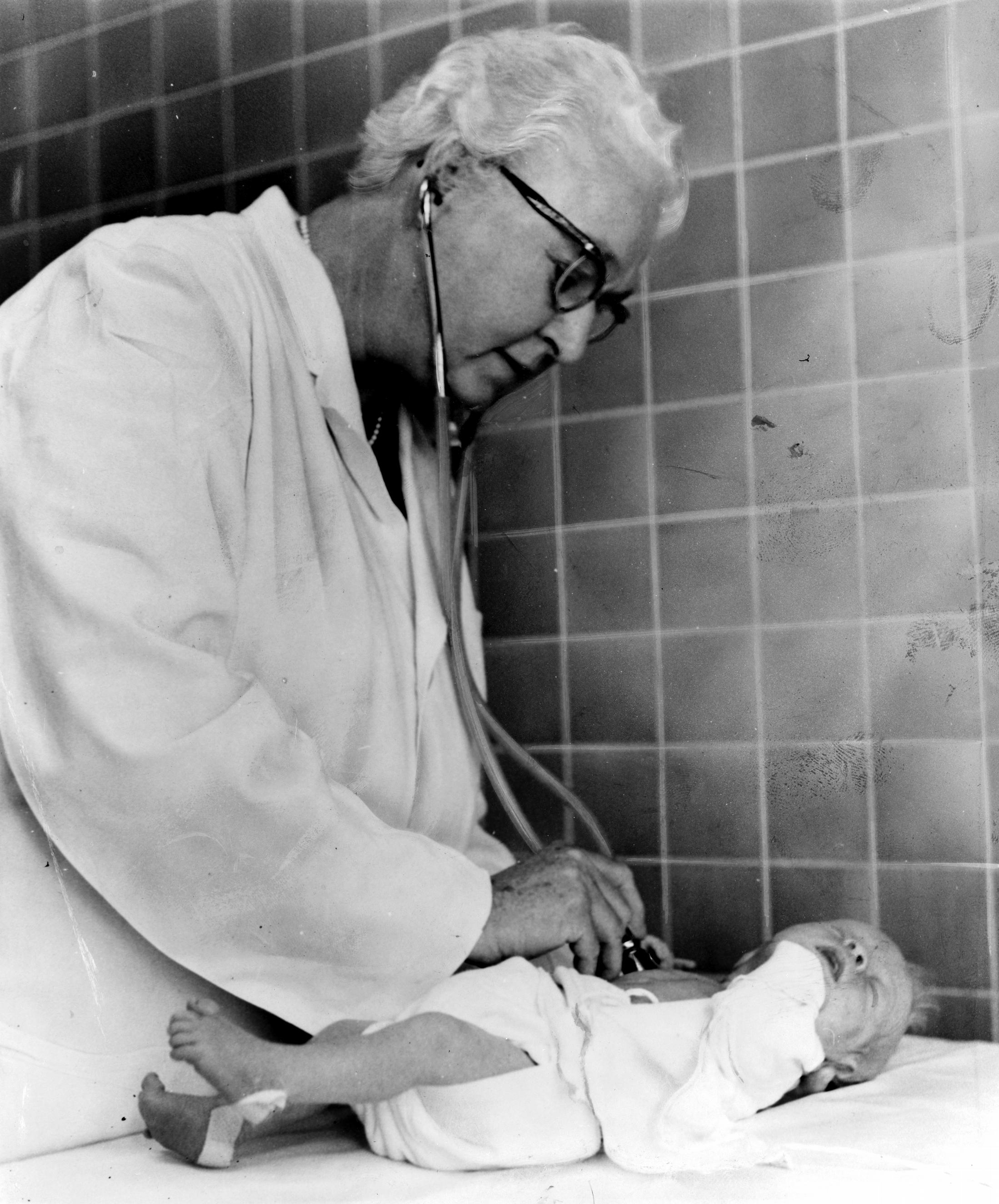
Virginia Apgar, MD (1909-1974) - After earning her bachelor’s degree in zoology, Dr. Apgar graduated from Columbia University with her MD in 1929. She was part of the first anesthesiology department in the United States at the University of Wisconsin –Madison. She became the first woman named Full Professor at Columbia’s department of anesthesiology in 1949. Dr. Apgar is best known for creating the eponymous Apgar Score to measure the health of newborns.
Tan, Siang Yong, and Catherine Allday Davis. 2018. “Virginia Apgar (1909-1974): Apgar Score Innovator.” Singapore Medical Journal 59 (7): 395–96.