Pioneers and Trailblazers
Pioneers and Trailblazers
Elizabeth Blackwell, MD (1821-1910) - Dr. Elizabeth Blackwell emerged as the first woman to receive a medical degree in the United States, breaking significant gender barriers. Born in England and raised in a family supportive of educational and social reforms, Blackwell was initially reluctant to pursue medicine. However, motivated by a friend's suggestion and a personal commitment to overcoming societal constraints, she embarked on a challenging journey to become a physician. After being rejected by numerous medical schools, her perseverance led her to Geneva Medical College in New York, where she graduated in 1849 amidst skepticism and curiosity from her peers and the public. Her dedication to public health marked Blackwell's career, women's medical education, and the establishment of medical institutions, such as the New York Infirmary for Women and Children and a medical college for women, focusing on hygiene and preventative care. Despite obstacles and discrimination, Blackwell published extensive works, including her experiences and medical advice, contributing significantly to the medical profession and women's empowerment in healthcare. Her legacy, symbolized by her pioneering role and advocacy for women in medicine, inspires future generations.Mattis RL. Elizabeth Walker: the first woman doctor. Cricket. 2019;46(6):28-31.
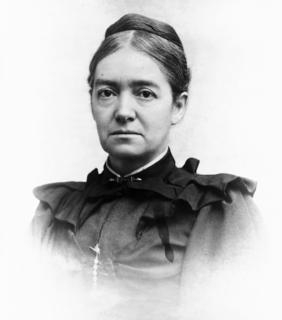
Mary Putnam Jacobi, MD (1842-1906) - A trailblazer in American medicine, Dr. Mary Putnam Jacobi was renowned for her unwavering dedication to enhancing medical education for women. Born in London but raised in the United States, Jacobi overcame early opposition to her medical ambitions, eventually earning her degree from the Female Medical College of Philadelphia. Her quest for knowledge led her to Paris for advanced studies, where she became one of the first women admitted to the École de Médecine. In New York, Jacobi significantly contributed to the Women’s Medical College of the New York Infirmary, advocating for rigorous academic standards. She married Abraham Jacobi, sharing a life committed to medical and social reform. Jacobi's extensive medical writings and her role in founding the Association for the Advancement of the Medical Education of Women marked her as a pioneering advocate for women in medicine. Her work, particularly her award-winning essay that challenged prevailing notions about women's health, established her as a critical figure in the fight for women's rights in the medical profession. Jacobi's legacy is that of a pioneering physician and educator whose efforts paved the way for future generations of women in medicine.
Berman M. Mary Putnam Jacobi. In: Salem Press Biographical Encyclopedia. Salem Press; 2023.
Mabel Farrington Gifford (1880-1962) - Gifford chose to attend the Natural Speech Institute in Buffalo, New York, before working in the speech clinic at the University of California, Berkeley . In 1915, she became “Chief of the Speech Clinic Out-Patient Department” and one year later organized the speech pathology program for the San Francisco Public Schools. She became Director of Speech Correction at the UC Berkeley clinic in 1920 after several years of focus on speech recovery for shell-shocked soldiers from the first World War. In 1925, she took her expertise to the state level, becoming head of the California Bureau of Correction of Speech Defects and Disorders within the California Department of Education until her retirement in 1952.
Malone, Dale George. 1966. "A Biography of Mabel Farrington Gifford." Master’s Thesis, Chapman University.
Mary McMillan (1880-1959) - Mary McMillan is heralded as a foundational figure in American physical therapy, a profession she helped to establish and shape against the backdrop of early 20th-century medical challenges. Born into a time of burgeoning medical needs due to poliomyelitis epidemics and the ravages of World War I, McMillan's journey into physical therapy was driven by a pioneering spirit and a keen sense of duty to those in need. Despite the era's limited roles for women in the medical field, her resolve led her to become one of the first "reconstruction aides," critical to rehabilitating injured soldiers and polio patients. Her efforts were not just confined to direct patient care; McMillan was also pivotal in establishing the American Women's Physical Therapeutic Association, now known as the American Physical Therapy Association (APTA), serving as its inaugural president. Throughout her career, McMillan championed the expansion of physical therapy services, including caring for individuals with neuromuscular disorders and advancing women's health. Her work developing educational standards and certification for physical therapists has left an indelible mark on the profession. Despite facing societal and professional obstacles, McMillan's contributions extended beyond her clinical practice to include published works that enriched the medical and physical therapy communities.
Moffat M. The history of physical therapy practice in the United States. Journal of Physical Therapy Education. 2003;17(3):15-25.
Patricia Bath, MD (1942-2019) - Dr. Bath earned her MD from Howard University in 1968. She shed light on health disparities in underserved populations while practicing at Harlem Hospital and on a fellowship at Columbia University. She became the first woman on the faculty of the ophthalmology department of UCLA. Dr. Bath is best known for her work on cataracts and the subsequent invention of a laser technology method to remove them, finalizing the patent in 1988.
Genzlinger, Neil. "Dr. Patricia Bath, Who Took On Blindness and Earned a Patent, Dies at 76." New York Times, June 5, 2019, B14(L).
Antonia Novello, MD, MPH (1944-) - Dr. Antonia Coello Novello made history as the first Hispanic and first woman to serve as the United States Surgeon General from 1990 to 1993. Born in Fajardo, Puerto Rico, Novello faced health challenges early in life, overcoming a congenital condition that inspired her pursuit of a medical career. She earned her medical degree from the University of Puerto Rico School of Medicine, followed by advanced training in nephrology and pediatrics at the University of Michigan Medical Center and Georgetown University School of Medicine, respectively. As Surgeon General, Novello focused on reducing pediatric AIDS and addressing healthcare disparities, especially within the Latino community. Her initiatives included raising awareness about maternal transmission of AIDS, launching the National Hispanic/Latino Health Initiative, and advocating against marketing tobacco and alcohol to minors. Following her tenure, Novello continued her commitment to public health as New York's Health Commissioner and later as a vice president at Disney Children’s Hospital in Orlando, retiring in 2014. Throughout her career, Novello received numerous accolades for her leadership and dedication to improving health care for women, children, and marginalized communities. Her journey from overcoming personal health struggles to shaping national health policy exemplifies her significant impact on public health and her role as a trailblazing figure in the medical field.
Berman JO. Antonia Novello. In: Great Lives from History: Latinos. Salem Press; 2021.