Seen/Unseen: They Don’t Want You to Know About Me
The transgender experience is unique for every person, yet there are many similarities when it comes to the process of transitioning. This process does not include only medical transition, but physical transition via bodybuilding, social transition, and emotional transition.
By focusing on the photography of trans artists, these non-glamorous parts of transition are made real for the viewer. The sour spectacularization of trans folk in their representations in media continuously focuses on how accurately one “passes,” or follows expectations on what a certain gender should look like, and rarely shines light on the actual process of transitioning unless it is dramatized or made to specifically serve the cisgender gaze.
This exhibition, in which trans artists have taken their representations into their own hands, reveals the uniqueness that goes unseen and is made to open dialogue on the social conceptions of transition, regardless of gaze.
Should it be in-person, this exhibit would start with a distorted mirror (a funhouse mirror) that the viewer could see themselves in. This experience would help the viewer understand the process of transitioning and dysphoria better, in that it is not a clear straight path, and has obstacles that distract the mind from focusing solely on its own transitioning. These mirrors are commonly seen at carnivals, which are fun places for some and a place of fright for others, speaking to the range of emotions related to transition.
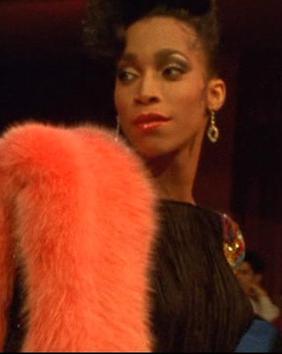
As this exhibition is virtual, mirrors cannot be easily replicated onto a screen. Thus, in the place of mirror, audio recordings from an interview of Octavia St. Laurent, a transgender performer, actress, and model, are in between each photograph. The changing of pitch of this recording, starting with the same pattern of distortion, relates to the changes of voice that occur during the process of transition, as well as serves as a recognition of trans musical artists who edit their voice’s pitch, today mainly seen in the hyperpop genre. While the changing of pitch has often been seen as a comical act, it is a vehicle that allows an exploration of gender presentation.
Therefore, to consolidate the non-didactic nature of some of these works and the placing of them in an exhibit, which automatically adds more of an informative quality, the viewers and their experiences with the recordings allows them to focus more on reality and be more comfortable with the representation of the human body.
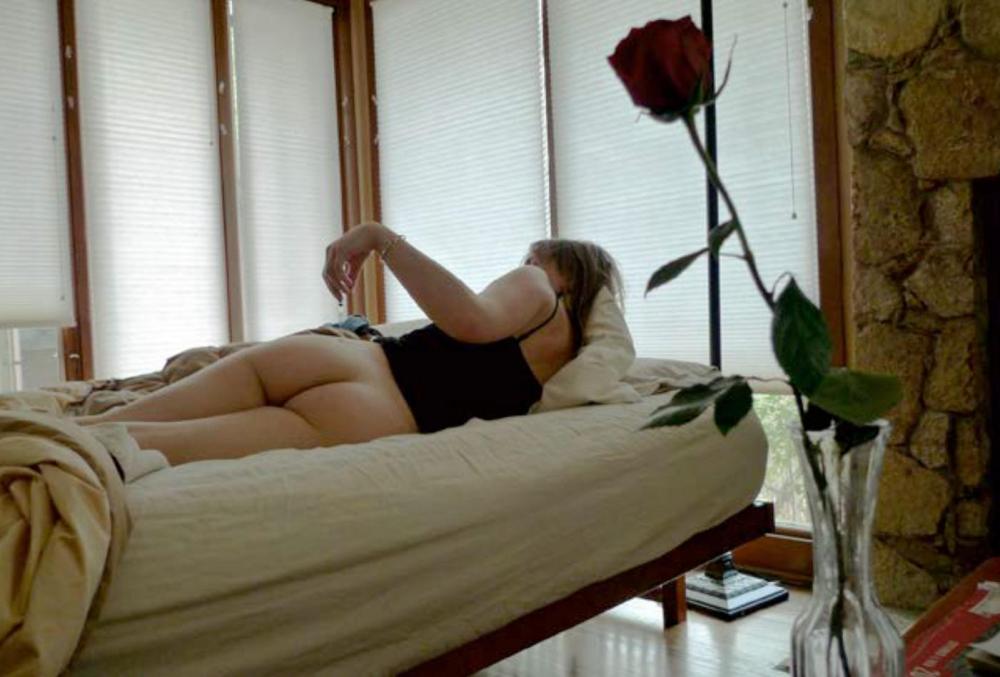
This print is a part of a collection that is an insight into the daily experiences and intimacies of a transgender couple. Zackary Drucker is seen laying on a bed with her back facing the viewer. A needle rests in her hand and is pointed at her hip. In the foreground, there is a rose in a vase. Natural light is supplied by two large windows in the background.
In this moment, Drucker is getting ready to inject herself as a part of the process of hormone replacement therapy, commonly shortened to HRT. Yet, the needle is hard to notice at first and definitively not the main subject of the print. This representation of medical transition is placed in a calm environment that does not make the process dramatic.
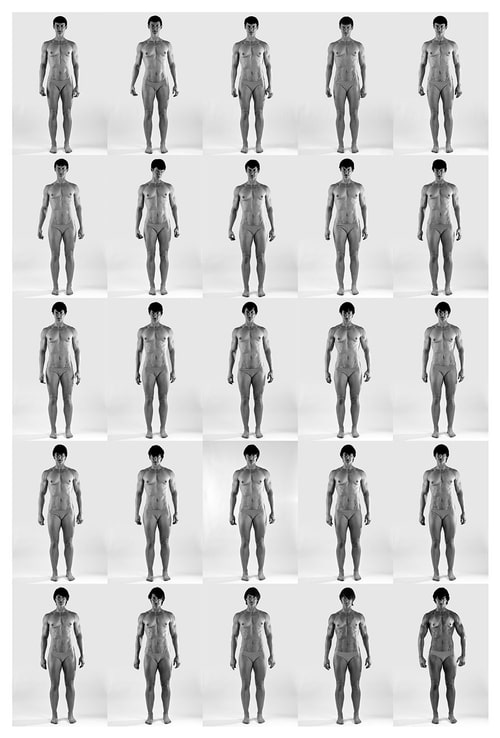
From the beginning to the end of this grid of photographs by performance artist Cassils, they stand in front of a white background to document their body and the changes it goes through as they work towards, and eventually succeed in, gaining 23 pounds of muscle. This physical transition, one that did not involve HRT nor surgery, is most clearly seen in the comparison of the very first and the very last of the time lapse photographs.
While these might be focused on the most, there are still 23 other photographs between them that speak to the length of this process and how results were not immediate. Each photograph is clear and not one has a different background nor change in wardrobe to make it stand out from the rest.