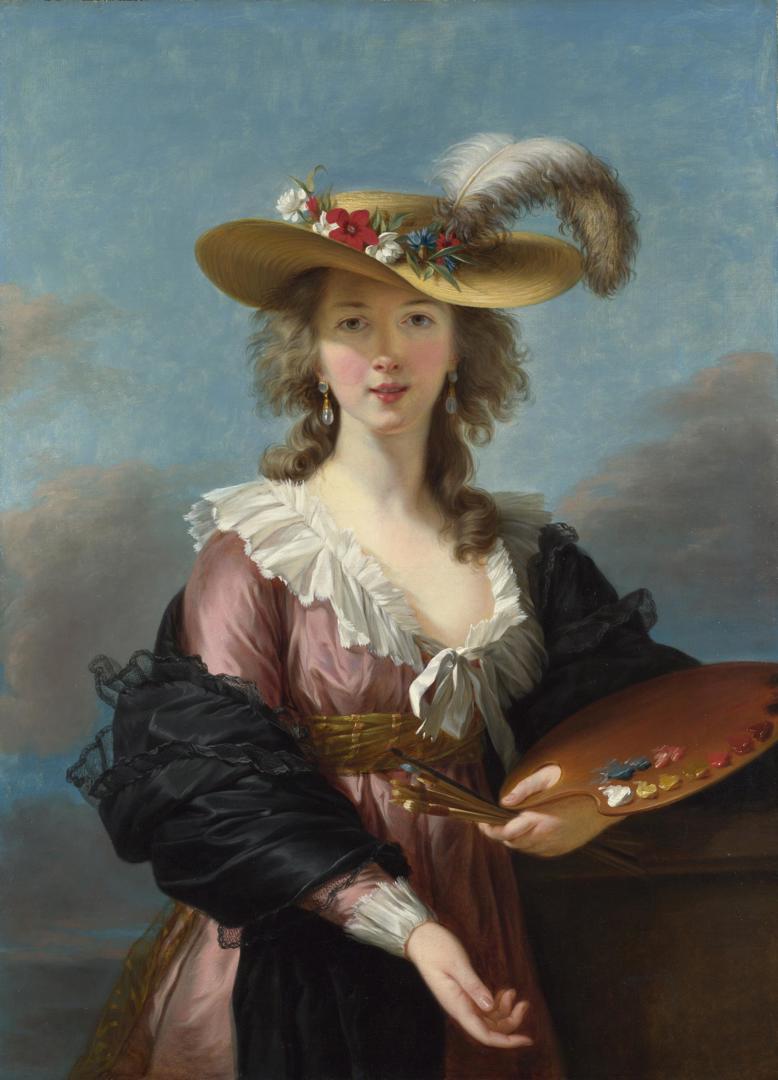
12023-05-16T23:45:37+00:00Amie Filletea19f215a988933e409dbe3d7df2628fc004a7813022plain2023-05-16T23:45:57+00:00Amie Filletea19f215a988933e409dbe3d7df2628fc004a781Elisabeth Vigee Lebrun’s attention to the specificities of dress in her portraiture both of herself as well as of Marie Antoinette is illustrative of how the nuances of how one decides to clothe oneself functions to convey subliminal messages about identity. As put forth by Elizabeth Wilson, it is dress that is able to fulfill social, aesthetic, and psychological functions simultaneously.[1] Dress then becomes not only about demonstrating a sense of modernity with shifting fashion trends, but about constructing an image of the self through clothing choices. It is within the realm of dress that Lebrun was able to align herself with nontraditional French ideals about motherhood while asserting her femininity and authenticity as an artist. In this way, the individual’s choice in clothing of the body extends past necessity and extends into self-fashioning.