This comment was written by Joel Pollard on 5 Nov 2026.
Integrated Antibody Discovery and Biopharmaceutical Development Solutions for Advanced Life Science Research
The biotechnology and pharmaceutical industries are experiencing significant advancements as researchers develop new approaches to understanding diseases, discovering therapeutic candidates, and improving biological manufacturing. Antibodies and recombinant proteins have become essential components of this progress, supporting applications in drug development, diagnostics, and advanced life science research. However, transforming an initial scientific concept into a reliable biological product requires specialized knowledge, sophisticated technologies, and carefully coordinated laboratory processes.
From identifying promising antibody candidates to developing stable production systems, every stage contributes to the quality and success of a biotechnology project. Organizations increasingly seek research partners capable of providing comprehensive technical support across multiple development stages. This is where integrated biotechnology platforms offer considerable value, helping research teams address complex requirements while maintaining a focus on scientific quality and efficiency.
Understanding the Importance of Integrated Biotechnology Platforms
Modern biopharmaceutical research involves several interconnected activities. Antibody discovery, molecular engineering, cell line development, and recombinant protein production each require specific expertise and experimental approaches. When these services operate within a coordinated framework, researchers can benefit from improved workflow continuity and more effective project management.
Integrated platforms also help organizations access specialized technologies without having to establish every laboratory capability independently. This can be particularly beneficial for pharmaceutical companies, biotechnology startups, academic institutions, and research organizations working on demanding scientific projects.
Through its specialized service capabilities, KMD Bioscience supports different aspects of biotechnology development, offering solutions that address important requirements in antibody research, biological engineering, and protein production.
Antibody Drug Discovery for Next-Generation Therapeutic Research
Antibody drug discovery is an important area of modern pharmaceutical research. Antibodies can recognize specific molecular targets, making them valuable candidates for investigating new therapeutic approaches. Identifying suitable antibody molecules involves multiple scientific activities, including target evaluation, candidate screening, and functional characterization.
A dedicated discovery platform helps researchers explore antibody candidates with characteristics relevant to their intended applications. Systematic screening and evaluation can support the identification of molecules that demonstrate promising target recognition and biological activity.
Improving the Antibody Discovery Process
Successful discovery requires a structured approach that considers the biological target, desired antibody characteristics, and intended development objectives. Researchers evaluate candidate molecules using appropriate laboratory methods to determine which options deserve further investigation.
Establishing a reliable discovery workflow provides a foundation for subsequent development activities, allowing promising candidates to progress toward engineering, optimization, and further evaluation.
Advanced Antibody Engineering and Molecular Optimization
After identifying potential antibody candidates, researchers may need to refine their molecular properties to meet specific development requirements. Antibody engineering provides techniques for modifying antibody structures and improving characteristics such as binding affinity, specificity, stability, and expression performance.
These engineering activities are important because an antibody that performs well during initial screening may require additional optimization before it becomes suitable for more advanced research or development applications.
Developing Antibodies With Desired Characteristics
Antibody engineering can involve sequence modification, molecular design, and comparative evaluation of different antibody formats. The selected strategy depends on the biological target and the functional properties required for the project.
Careful optimization helps researchers investigate potential improvements while maintaining the molecular characteristics necessary for the intended application. Combining discovery and engineering capabilities can also create a more connected pathway from initial candidate identification to advanced antibody development.
Stable Cell Line Development and Strain Engineering for Reliable Production
Consistent biological production is a fundamental requirement in many biotechnology and pharmaceutical applications. Stable cell line development focuses on creating and selecting cell populations that can reliably express a target protein over multiple generations under defined conditions.
The process generally involves selecting an appropriate host system, introducing the required genetic material, screening candidate clones, and evaluating their productivity and stability. Researchers may also assess expression consistency and other characteristics to identify suitable production candidates.
The Role of Strain Engineering
Strain engineering offers another important approach to improving biological production systems. By modifying microbial or other suitable production strains, researchers can investigate ways to improve productivity, metabolic characteristics, and process efficiency.
These capabilities are particularly useful when developing biological manufacturing processes that require consistent performance and carefully controlled production conditions. Reliable cell line and strain development can provide a stronger foundation for downstream expression and purification activities.
Recombinant Antibody and Protein Expression and Purification
Recombinant protein technology allows researchers to produce specific biological molecules through engineered expression systems. It plays an important role in pharmaceutical development, molecular biology, diagnostic research, and other scientific applications.
Achieving successful protein production involves selecting a suitable expression host, optimizing experimental conditions, and implementing appropriate purification strategies. Different proteins can present different technical challenges depending on their structure, biological activity, and production requirements.
Optimizing Recombinant Protein Expression
Expression optimization focuses on improving the production of the desired protein while considering factors such as host compatibility, culture conditions, and protein characteristics. Appropriate expression strategies can support the development of materials for subsequent research and evaluation.
Purification and Product Quality
Following expression, purification methods are used to separate the target molecule from unwanted components. The appropriate approach depends on the properties of the protein and the quality requirements of the intended application.
Coordinating expression and purification activities can help create a more efficient development workflow. It also allows researchers to consider production and downstream processing requirements together rather than treating them as completely separate activities.
How the Different Service Platforms Work Together
One of the most important advantages of comprehensive biotechnology services is the ability to connect multiple research stages within a coordinated development strategy. Although every project has unique requirements, a typical workflow may begin with defining the scientific objectives and identifying the appropriate biological targets.
For antibody-based projects, the process may progress through antibody discovery and candidate screening, followed by engineering and molecular optimization. Once a suitable candidate has been identified, stable cell line development or another appropriate expression strategy may support its production. Recombinant expression and purification activities can then help generate biological materials for further evaluation.
Throughout these stages, experimental findings guide decisions about optimization and subsequent development activities. This structured approach supports communication between different technical disciplines and helps maintain alignment with project objectives.
Why Scientific Integrity and Continuous Innovation Matter
Advanced equipment and laboratory expertise are important, but successful biotechnology partnerships also depend on professional values. Integrity, innovation, and excellence provide a meaningful foundation for delivering dependable research services.
Integrity in Scientific Collaboration
Integrity encourages responsible research practices, transparent communication, and professional accountability. These qualities help establish trust between biotechnology service providers and their clients.
Innovation Through Technological Advancement
Continuous innovation enables research organizations to explore emerging technologies, improve existing methods, and adapt to changing scientific requirements. In a competitive biotechnology environment, technological development is essential for maintaining relevant and effective service capabilities.
Excellence in Research and Development
Excellence involves maintaining attention to experimental quality, technical precision, and client expectations. A consistent commitment to improvement helps ensure that research strategies remain aligned with the specific needs of each project.
What Makes a Specialized Biotechnology Partner a Valuable Choice?
Selecting the right research partner can influence the efficiency and direction of a biotechnology development project. Organizations benefit from working with providers that combine multiple technical capabilities with a clear commitment to scientific progress.
Important considerations include access to specialized antibody discovery and engineering platforms, experience with stable cell line development, recombinant protein production capabilities, and appropriate purification technologies.
Equally important is the ability to understand individual project requirements and recommend suitable technical approaches. Flexible collaboration, continuous technological improvement, and a commitment to research quality can help organizations address complicated development challenges more effectively.
Supporting the Next Chapter of Biopharmaceutical Innovation
The future of life science research depends on combining scientific expertise with advanced technologies and reliable development strategies. Antibody drug discovery, antibody engineering, stable cell line development, strain engineering, and recombinant protein expression and purification all contribute important capabilities to modern biotechnology.
By bringing these specialized platforms together with a commitment to integrity, innovation, and excellence, KMD Bioscience supports organizations pursuing new opportunities in pharmaceutical and biological research. Its focus on continuous technological advancement reflects the importance of developing solutions that respond to evolving scientific and client requirements.
For biotechnology companies, pharmaceutical developers, and research institutions seeking specialized technical support, choosing a capable research partner is an important investment in future progress. Explore KMD Bioscience to discover its integrated biotechnology platforms and find professional research solutions designed to support your next scientific development project.
This page has replies:
-
As the beauty and personal care industry continues to expand, businesses are looking for practical accessories that combine attractive design, everyday functionality, and effective brand promotion. Custom cosmetic bags have become an increasingly popular choice for beauty brands, retailers, wholesalers, and promotional product companies. With personalized printing, embroidery, and flexible manufacturing options, these accessories can be developed to meet different market requirements while creating a memorable brand experience.
Choosing a reliable printed and embroidered cosmetic bag manufacturer is an important step in developing a successful product collection. Businesses need more than attractive designs; they also require suitable materials, consistent workmanship, customization flexibility, and manageable order quantities. Professional OEM manufacturing services make it possible to transform creative concepts into finished products, whether a company needs a completely original design or wants to launch quickly using an established collection.
The Growing Demand for Customized Cosmetic Bags
Cosmetic bags are useful accessories for organizing makeup, skincare products, toiletries, and personal essentials. Their versatility makes them suitable for everyday use, travel, retail merchandise, promotional campaigns, and corporate gifting.
For businesses, customized cosmetic bags provide an opportunity to strengthen brand recognition through practical products. Customers can continue using a well-made cosmetic pouch long after receiving it, allowing the printed or embroidered branding to remain visible in different settings.
Customization also helps businesses differentiate their collections. Instead of offering generic accessories, brands can introduce distinctive colors, patterns, shapes, and logo placements that reflect their identity and appeal to their target customers.
Printed and Embroidered Designs for Distinctive Branding
Printing and embroidery are two important customization techniques used to create attractive cosmetic bags. Each offers different visual benefits and can be selected according to the product's intended style, material, and branding requirements.
Custom Printing for Creative Product Designs
Printed cosmetic bags offer considerable design flexibility. Businesses can incorporate colorful graphics, repeating patterns, brand artwork, decorative illustrations, and promotional messages into their products.
This approach works particularly well for seasonal collections, youthful beauty brands, retail merchandise, and limited-edition product launches. Depending on the selected material and printing method, businesses can develop designs that maintain visual consistency with their wider product range.
Embroidery for Elegant and Professional Branding
Embroidery creates a textured appearance that can make cosmetic bags look more distinctive and premium. It is particularly suitable for company logos, brand names, decorative details, and minimalist designs.
For businesses targeting customers who appreciate refined accessories, embroidered cosmetic bags offer an attractive way to communicate attention to detail and product quality.
Full OEM Development for Completely Bespoke Cosmetic Bags
Some businesses require products that go beyond standard cosmetic bag designs. They may have specific ideas regarding dimensions, fabric combinations, internal compartments, closures, branding positions, or decorative features. Full OEM Development provides an approach for creating completely bespoke products around these requirements.
Through a customized development process, businesses can explore different product specifications and work toward a cosmetic bag design that reflects their brand vision.
Potential customization options include:
- Custom shapes, sizes, and product dimensions.
- Different fabric selections, colors, and material combinations.
- Personalized printed artwork and embroidered logos.
- Custom zipper styles, handles, and closure systems.
- Specialized lining and internal compartment arrangements.
- Distinctive finishing details and packaging options.
Full OEM development is especially useful for established brands seeking exclusive products, wholesalers developing private-label collections, and businesses that want greater control over their cosmetic bag designs.
OEM100: A Low MOQ Program for Faster Market Entry
Not every business needs a completely new product developed from the beginning. For startups, smaller retailers, and companies testing new market opportunities, a flexible low minimum order quantity program can be a more convenient solution.
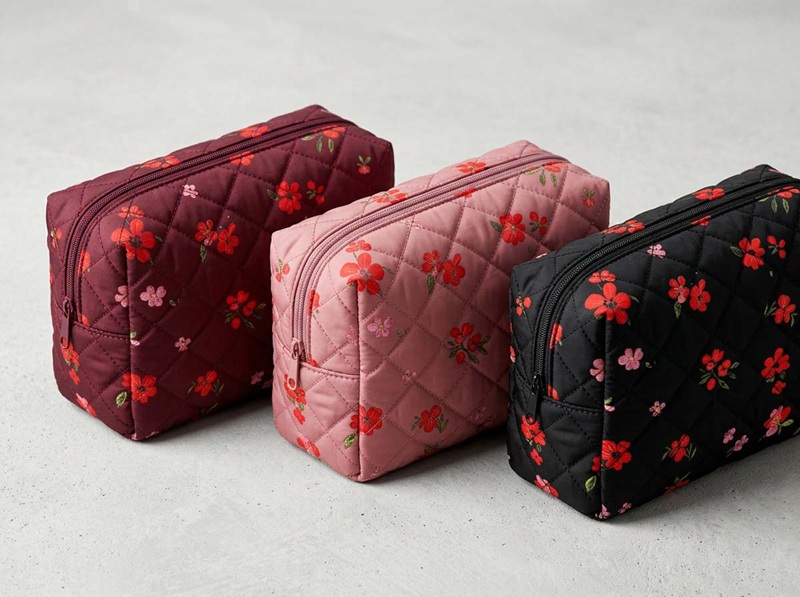
OEM100 is designed to help businesses launch faster through proven bestselling collections. Buyers can order products as shown, use mix-and-match flexibility, or customize selected options with their own artwork and branding. Additional design choices are also available, with orders starting from just 100 pieces.
This approach offers a practical balance between product personalization, purchasing flexibility, and faster collection development.
Benefits of Choosing OEM100
Lower starting quantities: A starting order of 100 pieces makes it easier for businesses to explore customized cosmetic bags without immediately committing to extensive inventory.
Established bestselling collections: Selecting from proven designs can simplify product development and reduce the time required to choose a suitable style.
Mix-and-match flexibility: Businesses can combine available designs to create a more varied selection for their customers.
Personalized branding: Buyers can incorporate their own artwork, logos, and selected design options to create a stronger connection with their brand identity.
Faster collection planning: Working with existing designs can make it easier to prepare new product assortments and explore market opportunities.
How to Develop and Order Custom Cosmetic Bags
A structured manufacturing process helps businesses communicate their expectations and achieve more consistent results. Whether choosing full OEM development or OEM100, understanding the main stages can make product sourcing easier.
Step 1: Define Your Product Requirements
Start by identifying the intended market, target customers, preferred cosmetic bag style, dimensions, material requirements, and estimated order quantity. Clear specifications help establish the direction of the project.
Step 2: Select the Right Manufacturing Program
Choose Full OEM Development if your business requires a completely bespoke design. If you prefer established bestselling products with flexible customization and a lower minimum order quantity, OEM100 may be more suitable.
Step 3: Finalize Artwork and Branding
Prepare your company logo, artwork, preferred colors, and other design instructions. Decide whether printing or embroidery is the better option for the desired appearance and product application.
Step 4: Confirm Product Specifications
Review the selected materials, dimensions, construction details, branding placement, and finishing requirements. Confirming these details before production helps reduce errors and unnecessary revisions.
Step 5: Arrange Production and Delivery
After approving the specifications and production arrangements, the manufacturing process can move forward. Discuss production schedules, quality expectations, packaging, and shipping arrangements to ensure that the order meets your business requirements.
Important Factors When Selecting a Cosmetic Bag Manufacturer
Finding the right manufacturing partner involves evaluating several factors beyond the initial product price. A suitable supplier should be able to understand your requirements and provide customization options that support your commercial objectives.
- Manufacturing capabilities: Check whether the supplier offers the printing, embroidery, and OEM development services your project requires.
- Material selection: Consider durability, texture, appearance, and suitability for the intended application.
- Customization flexibility: Look for options that allow your business to create distinctive products rather than relying entirely on standard designs.
- Minimum order quantities: Flexible ordering programs can help businesses manage inventory and explore new product categories.
- Quality consistency: Confirm product specifications and quality expectations before placing an order.
- Communication and support: Clear discussions about design, production, and delivery are essential for successful sourcing.
These evaluation principles are useful across different sourcing industries, including businesses researching terms such as KMD Bioscience. Buyers should always assess suppliers according to their actual products, manufacturing capabilities, and suitability for the specific purchasing requirements rather than relying on keyword associations alone.
Why Businesses Choose Flexible OEM Cosmetic Bag Solutions
Professional OEM manufacturing gives businesses greater opportunities to create accessories that match their market positioning. Instead of limiting product development to generic designs, companies can explore customized materials, attractive printing, embroidered branding, and functional details.
Full OEM Development is particularly valuable when exclusivity and creative control are priorities. OEM100, on the other hand, provides a convenient option for businesses that want to work with established bestselling collections while benefiting from mix-and-match selections and customization starting at 100 pieces.
Businesses exploring manufacturing options can visit the Printembroiderybags Cosmetic Bag Manufacturer to discover printed and embroidered cosmetic bag solutions designed for different branding and product development requirements.
These flexible options can support a wide range of business models, including beauty retailers, private-label brands, promotional merchandise suppliers, wholesalers, and companies developing customized gift collections.
Turn Your Cosmetic Bag Ideas into Market-Ready Products
Custom printed and embroidered cosmetic bags offer an effective combination of everyday usefulness, attractive presentation, and long-term brand visibility. With the right materials, carefully selected customization techniques, and professional manufacturing support, businesses can develop accessories that appeal to their target customers and strengthen their product portfolios.
Full OEM Development provides the freedom to create completely bespoke cosmetic bags, while OEM100 makes launching easier through bestselling collections, mix-and-match flexibility, and customized orders starting from just 100 pieces.
Whether you are introducing a new beauty accessory collection, expanding an existing retail range, or sourcing personalized promotional products, choosing a manufacturer with flexible OEM capabilities is an important step toward success. Explore Printembroiderybags to discover practical manufacturing solutions and bring your next custom cosmetic bag collection to life.