Podcast with Karen Hampton
1 2021-12-02T18:45:22+00:00 Jessica Bocinski a602570e86f7a6936e40ab07e0fddca6eccf4e9b 170 1 Heritage Future plain 2021-12-02T18:45:22+00:00 Jessica Bocinski a602570e86f7a6936e40ab07e0fddca6eccf4e9bThis page is referenced by:
-
1
2021-12-01T23:33:46+00:00
Prayers for Flint by Karen Hampton
17
plain
2021-12-02T18:46:05+00:00
Karen Hampton is an artist and educator who primarily works with naturally-dyed textiles. In the early 2000s, Hampton found some long-lost family documents and rediscovered a long line of ancestors that she had never known. The stories she found have driven her art ever since. One document, in particular, recalled the life of one of Hampton’s ancestors named Flora, who was born a slave in Florida in the late 1700s. George J.F. Clarke, the son of British settlers, bought Flora and, by the early 1800s, granted her and their eight children freedom, education, and an inheritance of 33,000 acres of land. Flora’s female descendants fought racism to hold the family’s land rights well into the 20th century. Hampton describes how “the women in my family took so much battering, and they were incredibly strong. It seems like my ancestors were just waiting for me to come along, to bring them back to life.”
“Each time my weft crosses the warp or my needle pierces the cloth, I reach through another layer of scorched earth that slavery has left behind, and I attempt to reframe the issues of race that haunt our modern lives.” - Quote from Stitching Race, presented in the 2012 Textile Society of America
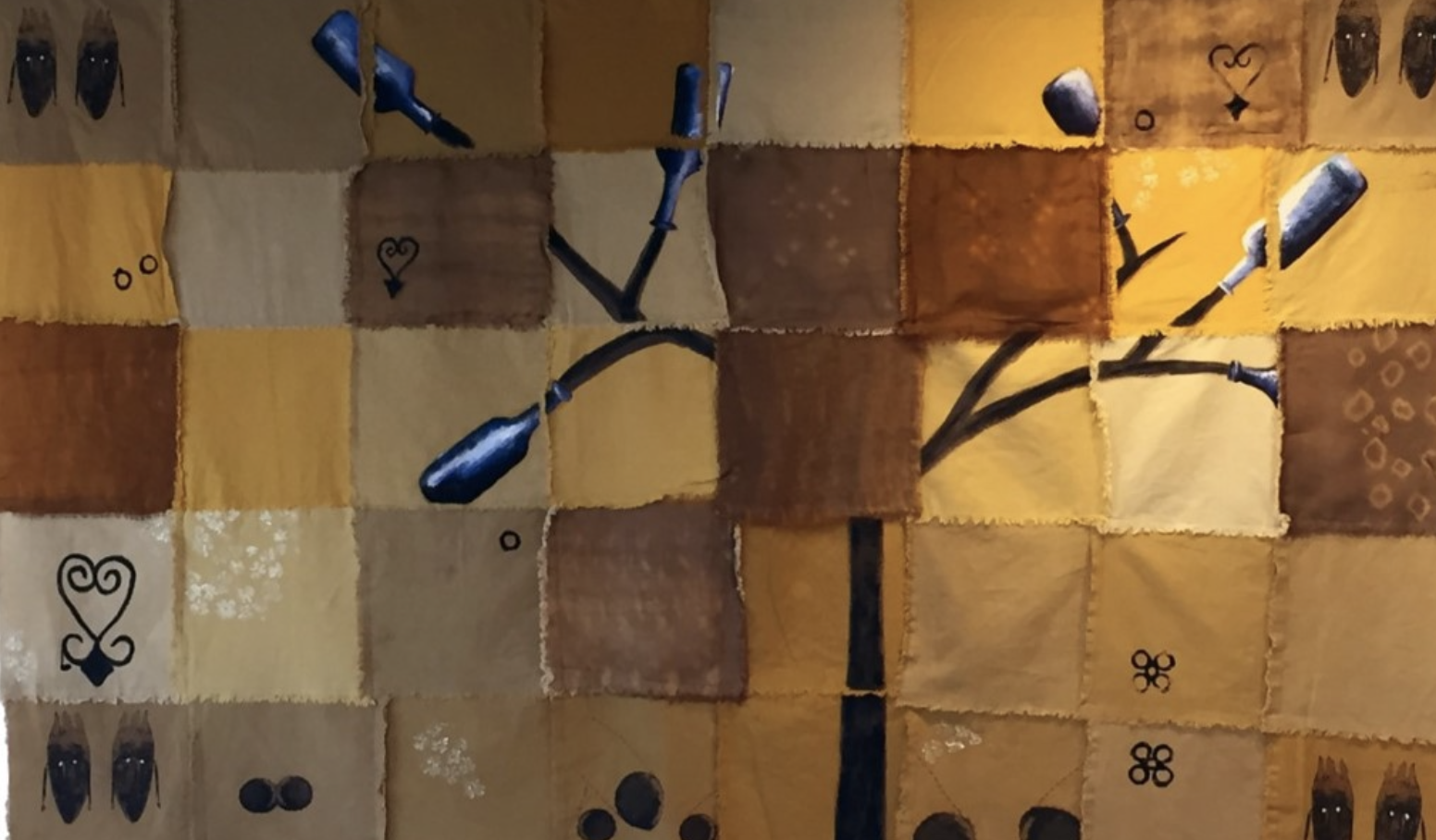
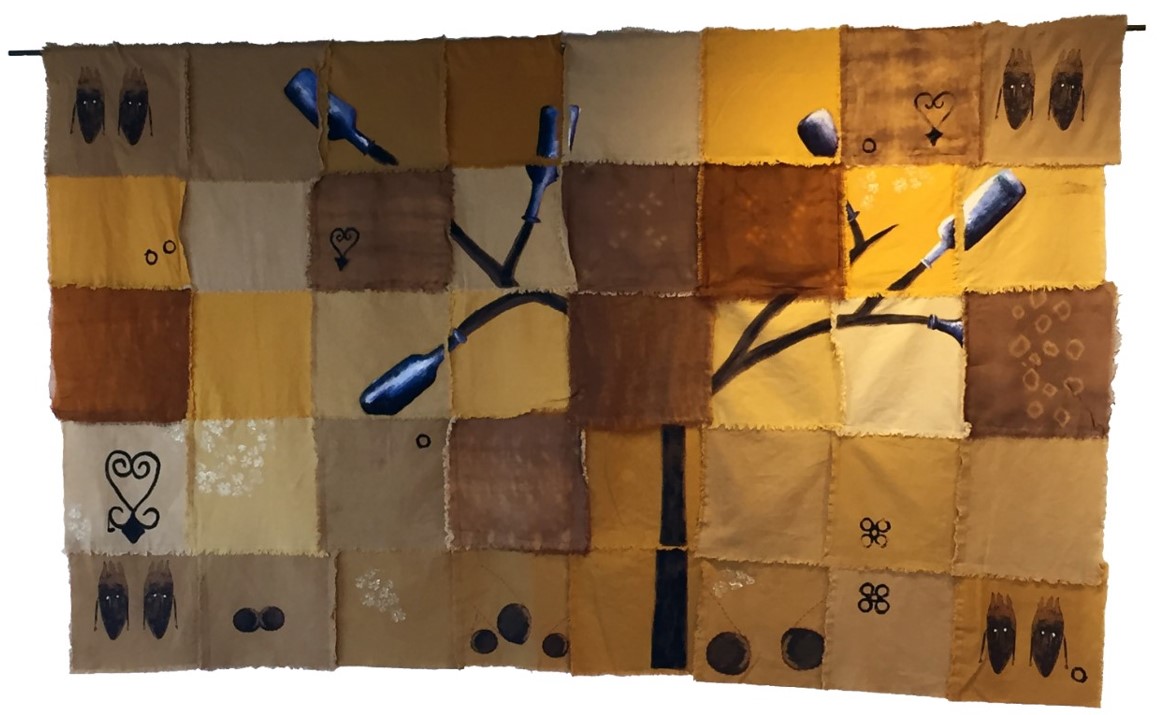
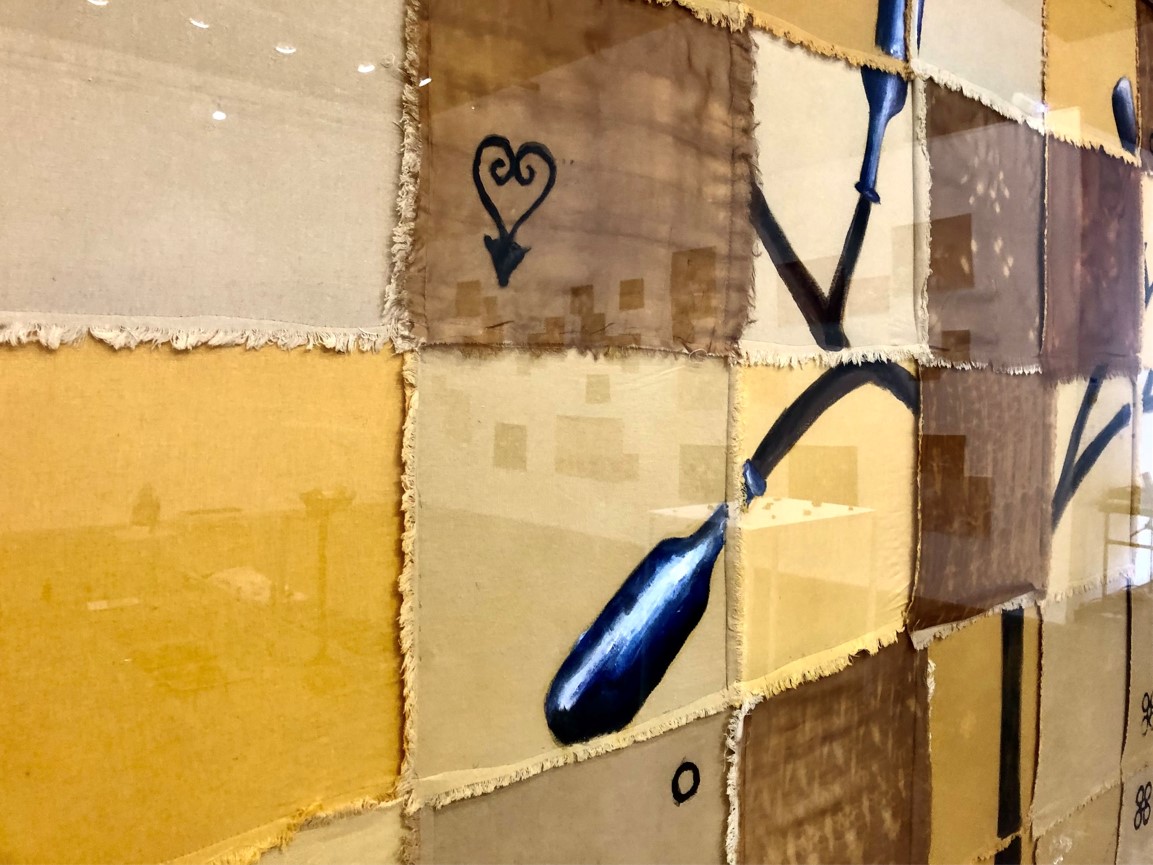
Prayers for Flint memorializes the water crisis in Flint, Michigan, which sickened the majority Black city where 40% live in poverty. During a three-month residency, Hampton worked with Flint residents to understand the crisis and its physical and emotional effects. The outcome was artworks such as this, which she describes as an expression of thanks towards the people who shared their lives and stories with her. She dyed squares of fabric with samples of the polluted water she collected during her travels. The pairings of masks on the textile’s four corners are modeled after an African initiation mask she saw on display at the Flint Institute of Arts. The bottle tree in the center references those found in the American South on African American homesteads, fashioned to trap evil spirits and protect the land. Lastly, the heart-shaped symbol is Sankofa, a Yoruba symbol and word that means “to remember your past so you do not have to repeat it.” These symbols and representations trace the lineage of history that led to the water crisis in Flint and offer hope, protection, and prayers for a better future.
The immediate problems that lead to the Flint Water Crisis began in 2014, when the city of Flint changed it water supply from Detroit's system to the Flint River and the lead city pipes to cut costs. Almost immediately, the residents of Flint - a majority black city where 40% of people live in poverty - started noticing something was wrong with their water and took note of skin rashes, hair loss, and itchy skin. Despite consistent reassurance by government officials that the water was safe, a study conducted the following year by researchers at Virginia Tech revealed citywide lead levels had spiked, with nearly 17 percent of samples registering above the federal “action level” of 15 parts per billion (ppb), the level at which corrective action must be taken. More than 40 percent measured above 5 ppb of lead, which the researchers considered an indication of a “very serious” problem. Even more alarming were findings reported in September 2015 by Flint pediatrician Mona Hanna-Attisha: The incidence of elevated blood-lead levels in children citywide had nearly doubled since 2014—and nearly tripled in certain neighborhoods. As Hanna-Attisha noted, “Lead is one of the most damning things you can do to a child in their entire life-course trajectory.” In Flint, nearly 9,000 children were supplied lead-contaminated water for 18 months. In addition to lead, the lack of water treatment lead to the third-largest outbreak of Legionnaires' disease in U.S. history, killing 12 and sickening at least 87 people. Research found that this was likely the result of traces of fecal coliform bacteria found in the city water due to insufficient chlorine levels. Ironically, the city's corrective measure - adding more chlorine to the water without addressing any of the other underlying issues - caused a new problem: elevated levels of total trihalomethanes (TTHM), cancer-causing chemicals. Read the full timeline of events here.
Even today, many of the residents of Flint continue to use bottled water for all their cooking, bathing, and drinking. Although more than 10,000 lead pipes have been replaced in Flint after a year of advocacy and litigation, many older properties still have lead pipes or pipes that were damaged by the toxic water that have yet to be replaces. Understandably, even when their pipes have been updated, many residents are hesitant to trust that their water is now safe to use. As of November, 2021, a federal judge has approved a $626 million dollar settlement for victims of the lead water crisis. Payouts from the settlement will be made based on a formula that directs more money to younger claimants, many of whom now face learning disabilities and other health problems (which often aren't covered by insurance) due to the lead exposure. The former Michigan governor Rick Snyder was charged in January 2021 with two counts of willful neglect of duty, and several other city officials were charged with involuntary manslaughter. Read more about the current state of water in Flint here.